


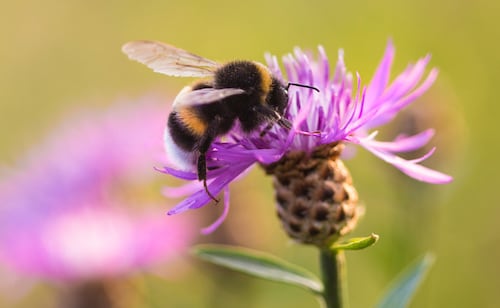
Mexico City enacts law to protect bees and pollinators
Translated from Spanish, summarized and contextualized by DistantNews.
At a glance
News
Official statement
New plan
- Mexico City has enacted a new law to protect bees and other pollinators.
- The law aims to conserve biodiversity and ensure the continuity of ecosystem services like pollination.
- It regulates beekeeping activities and establishes guidelines for apiary placement within the city.
Mexico City has officially published its Law for the Promotion of Beekeeping and the Conservation of Pollinators, a move designed to safeguard these vital insects and their ecological roles. The legislation, which takes effect immediately, was issued by the Head of Government and announced via the Official Gazette.
The core objective of this new regulation is to protect, conserve, rescue, research, disseminate, promote, regulate, and organize activities related to beekeeping and pollinating agents. It seeks to guarantee the ongoing provision of ecosystem goods and services derived from biodiversity, particularly pollination. This will be achieved by advancing the technical, modernization, and sustainable use of the beekeeping sector, encompassing the production, transformation, and commercialization of bees and their derived products.
The law also aims to establish ordinances beneficial to the beekeeping sector and honey-producing communities. It emphasizes the preservation of natural habitats for pollinators and promotes the sustainable and competitive development of beekeeping. The Head of Government, in conjunction with the Ministries of Environment, Economic Development, and Education, will coordinate actions for pollinator conservation, protecting pollination services, and strengthening beekeeping as a sustainable productive sector.
Specific guidelines are provided for apiary placement within Mexico City. Locations must adhere to environmental, territorial, sanitary, and social criteria, aligning with land use regulations and territorial planning instruments. In conservation zones, apiaries are considered compatible with sustainable land use, provided they do not conflict with conservation or ecological restoration efforts. In agricultural or livestock zones, apiaries can be established without restriction, as long as a minimum distance from existing hives is maintained, harmonious coexistence with other agricultural activities is ensured, and sanitary and environmental norms are met. The legislation recognizes bees, including native species and *Apis mellifera*, along with other pollinators like butterflies, hummingbirds, bats, moths, and beetles, as priority species for protection due to their ecological value and essential role in biodiversity conservation.
DistantNews Editorial
Originally published by El Universal in Spanish. Translated, summarized, and contextualized by our editorial team with added local perspective. Read our editorial standards.
More Stories



From Our Blog

What Press Freedom Means for the News You Read

What Gets Lost (and Found) When News Is Translated

The Critical Role of Diaspora Media in Global News

What Travellers Should Know About Countries with Restricted Press

A Digital Nomad's Guide to Following Local News
