


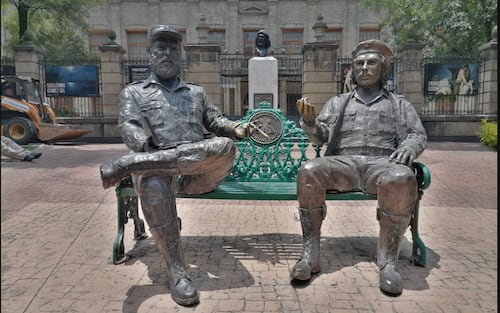
Mexico City mayor criticizes rejection of statue exchange for public works materials
Translated from Spanish, summarized and contextualized by DistantNews.
At a glance
News
Sources not specified
Context piece
- The mayor of Cuauhtémoc criticized the head of government for rejecting an offer to exchange statues of Che Guevara and Fidel Castro for public works materials.
- She argued that the statues represent an ideology that led to widespread poverty in Cuba, contrasting it with the needs of Mexico City residents.
- The head of government stated that new statues will be funded by social groups and activists, not public funds, and their location is still being determined.
Alessandra Rojo de la Vega, the mayor of Cuauhtémoc, expressed regret that Mexico City's head of government, Clara Brugada, refused an exchange proposal. Rojo de la Vega had offered to trade statues of Ernesto “El Che” Guevara and Fidel Castro for essential public works materials, such as paving supplies and garbage collection machinery.
Rojo de la Vega criticized Brugada's decision, stating it prioritized personal admiration for the Cuban model over the needs of Mexico City's residents. She highlighted Cuba's economic decline, noting that its currency once matched the dollar, but the revolution she claims Brugada wishes to honor plunged 89% of the population into extreme poverty.
I regret that she has put ideology and personal admiration for the Cuban model of government above service to the neighbors.
In response to the proposal, Brugada announced that new sculptures to replace the removed ones would be financed through the "economic solidarity" of social groups and activists, not public funds. The location for these new figures is still under consideration, following the Cuauhtémoc delegation's removal of the original statues from Jardín Tabacalera last year.
Cuba was the third best economy in Latin America and the 30th in the world. The Cuban peso was worth the same as the dollar and Cubans earned around $520 a month, the equivalent of $6,000 today. But the revolution you want to honor led 89% of its population into extreme poverty.
DistantNews Editorial
Originally published by El Universal in Spanish. Translated, summarized, and contextualized by our editorial team with added local perspective. Read our editorial standards.
More Stories

From Our Blog

What Press Freedom Means for the News You Read

What Gets Lost (and Found) When News Is Translated

The Critical Role of Diaspora Media in Global News

What Travellers Should Know About Countries with Restricted Press

A Digital Nomad's Guide to Following Local News
