

Mexico City Searches Rugged Areas for Missing Persons
Translated from Spanish, summarized and contextualized by DistantNews.
At a glance
News
Named sources
Ongoing story
- Authorities are searching for missing persons in three rugged areas of Mexico City: Sierra de Guadalupe, Ajusco, and the barrancas of Álvaro Obregón.
- Searches in these rural areas are less frequent than in urban zones, often initiated when urban searches yield no results or when there's a hypothesis that individuals may have hidden in these less-developed locations.
- The Sierra de Guadalupe has the highest number of pending cases, followed by Álvaro Obregón's barrancas and the Ajusco's wooded areas, with over 200 cases pending in the Sierra de Guadalupe alone.
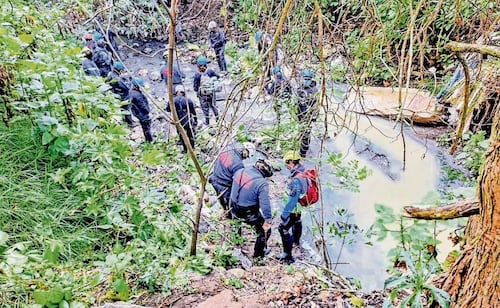
Mexico City authorities are intensifying searches for missing persons in three rugged, undeveloped areas: the Sierra de Guadalupe, the Ajusco mountain range, and the barrancas of Álvaro Obregón.
Luis Gómez Negrete, head of the Mexico City Search Commission, stated that these rural searches are less frequent than urban ones. They are typically conducted when individuals disappear while hiking or working in these areas, or when there's a suspicion that a missing person might be hidden there after exhausting urban search possibilities.
When we search in rugged areas, it's for a person who recently went missing while in that location, like cases of people who work or hike in the mountainous areas surrounding the city, or because it's a long-standing case and our hypothesis is that people could have been hidden in those places.
"When we search in rugged areas, it's for a person who recently went missing while in that location, like cases of people who work or hike in the mountainous areas surrounding the city, or because it's a long-standing case and our hypothesis is that people could have been hidden in those places," Gómez Negrete explained.
If I have a case that I haven't found in the urban area, because I don't have cell phone mobility in the urban area, I don't have it captured by C5 cameras or private cameras, I don't have it with observation or witness sightings, then it's a case that leads me to low-infrastructure places and those areas are often the rugged ones, open fields.
The Sierra de Guadalupe accounts for the largest number of pending cases, with over 200 individuals yet to be located. The barrancas of Álvaro Obregón and the wooded areas of Ajusco, which also extend into Magdalena Contreras and Xochimilco, follow. Other areas like the Sierra de Santa Catarina in Iztapalapa and the Tláhuac-Chalco lagoon zone are also sites of ongoing searches.
These searches are often a last resort, pursued when a missing person's digital footprint, surveillance footage, or witness sightings provide no leads in urban environments. The hypothesis is that individuals might have sought refuge or been taken to these remote, less-infrastructured locations.
The area we identify with the main incidence and where we group more than 200 pending cases is the Sierra de Guadalupe area. Then we have a relevant concentration in the Álvaro Obregón area, in the barrancas. Then we have the wooded area of Ajusco, but it is linked with Magdalena Contreras and Xochimilco, it is not only Tlalpan.
DistantNews Editorial
Originally published by El Universal in Spanish. Translated, summarized, and contextualized by our editorial team with added local perspective. Read our editorial standards.
More Stories

From Our Blog

What Press Freedom Means for the News You Read

What Gets Lost (and Found) When News Is Translated

The Critical Role of Diaspora Media in Global News

What Travellers Should Know About Countries with Restricted Press

A Digital Nomad's Guide to Following Local News
