


Mexico Congress May Summon Rights Chief Over Army's Ayotzinapa Exoneration
Translated from Spanish, summarized and contextualized by DistantNews.
At a glance
News
Named sources
Under investigation
- Mexico's Congress is considering summoning the head of the National Human Rights Commission (CNDH) to explain a recommendation that appears to exonerate the Army in the Ayotzinapa case.
- The recommendation, which reportedly attributes the disappearance of 43 students to "individual omissions" rather than direct military responsibility, has drawn criticism from lawmakers and the victims' families.
- Movimiento Ciudadano senators and deputies are questioning the CNDH's actions, particularly its alleged dismissal of expert reports and its exclusion of the Army from the list of authorities addressed by the recommendation.
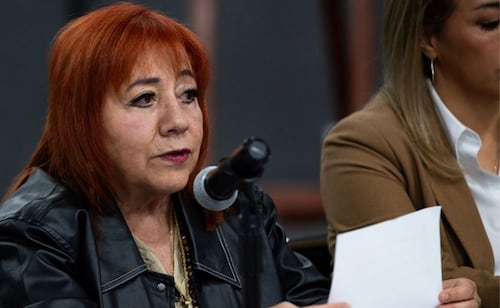
Mexico's Congress is set to review a proposal that could lead to the summoning of Rosario Piedra Ibarra, the head of the National Human Rights Commission (CNDH), to explain a recent recommendation concerning the Ayotzinapa case. The recommendation has drawn significant scrutiny for appearing to exonerate the Mexican Army in the disappearance of 43 students.
A proposal by Movimiento Ciudadano senators and deputies, now before the Permanent Commission of the Congress of the Union, questions Piedra's decision to clear the armed forces. The proposal calls for her to appear before the Senate to "inform and explain exhaustively" Recommendation 208/2026VG. This recommendation addresses grave human rights violations against 92 students from the Raúl Isidro Burgos Rural Normal School in Ayotzinapa, stemming from events on September 26-27, 2014.
Arguments within the proposal highlight that the CNDH's recommendation, issued on July 9, explicitly absolves the Army of institutional or direct military responsibility, instead framing the issue as "individual omissions." This stance is particularly contentious given that the Attorney General's Office is prosecuting at least 20 military personnel for alleged involvement in the events. Movimiento Ciudadano lawmakers find it "ominous" that the Secretariat of National Defense is not even listed as a recipient of the recommendation.
Furthermore, the proposal notes that Piedra has reportedly dismissed reports from the Interdisciplinary Group of Independent Experts (GIEI), appointed under precautionary measures by the Inter-American Commission on Human Rights, as well as work coordinated by the Commission for Truth and Access to Justice for the Ayotzinapa Case. This alleged disregard for expert findings and the perceived exoneration of the military have fueled criticism from victims' families and lawmakers alike.
De manera explícita exonera institucionalmente al Ejército, pues concluye que no hubo responsabilidad institucional ni militar directa en la desaparición; y acota lo castrense a “omisiones individuales”.
DistantNews Editorial
Originally published by El Universal in Spanish. Translated, summarized, and contextualized by our editorial team with added local perspective. Read our editorial standards.
More Stories

From Our Blog

What Press Freedom Means for the News You Read

What Gets Lost (and Found) When News Is Translated

The Critical Role of Diaspora Media in Global News

What Travellers Should Know About Countries with Restricted Press

A Digital Nomad's Guide to Following Local News
