

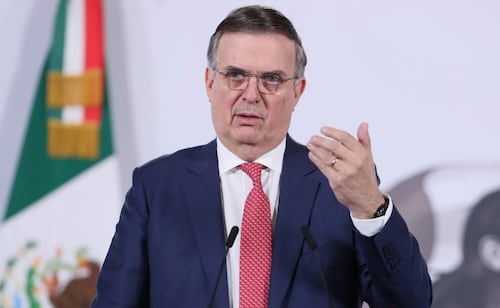
Mexico's Ebrard outlines two scenarios for T-MEC continuity, plans meeting with US and Canada
Translated from Spanish, summarized and contextualized by DistantNews.
At a glance
News
Named sources
New plan
- Mexico's Economy Secretary Marcelo Ebrard outlined two scenarios for the future of the T-MEC trade agreement.
- The treaty will remain in effect, with potential extensions to 2042 or annual reviews until 2036.
- Ebrard will meet with U.S. and Canadian counterparts to discuss the treaty's future on its sixth anniversary.
Mexico's Economy Secretary Marcelo Ebrard Casaubon has presented two potential scenarios for the future of the Mexico-United States-Canada Agreement (T-MEC), assuring that the trade deal will continue in force. The scenarios address potential extensions and review periods for the treaty, which marks its sixth anniversary.
The T-MEC will not cease to have validity, at least it will be maintained for another 10 years.
One scenario proposes extending the T-MEC's validity until 2042, with a comprehensive review scheduled for 2032. The alternative involves maintaining the current 10-year validity until 2036, but with annual reviews of specific topics. Ebrard clarified that these annual reviews would progressively narrow in scope, focusing on fewer issues each year rather than a complete renegotiation of the entire treaty.
One path is to go for a review in 6 years with an extension of the treaty's validity until 2042.
Ebrard is scheduled to meet virtually with U.S. Trade Representative Jamieson Greer and Canadian Minister of Trade Dominic LeBlanc to discuss the treaty's future. This meeting, as stipulated by the T-MEC text for its sixth anniversary, will guide the next steps for the agreement. Despite speculation about the U.S. potentially not seeking a 16-year extension, Ebrard expressed confidence that the T-MEC will not cease to be effective, emphasizing the ongoing formal conversations.
The other path is to maintain the 10-year validity that we already have planned until 2036 and conduct a review every year with an increasingly limited scope.
DistantNews Editorial
Originally published by El Universal in Spanish. Translated, summarized, and contextualized by our editorial team with added local perspective. Read our editorial standards.
More Stories

From Our Blog

What Press Freedom Means for the News You Read

What Gets Lost (and Found) When News Is Translated

The Critical Role of Diaspora Media in Global News

What Travellers Should Know About Countries with Restricted Press

A Digital Nomad's Guide to Following Local News
