


Mexico's must-explore mangrove reserves
Translated from Spanish, summarized and contextualized by DistantNews.
At a glance
News
Sources not specified
Context piece
- Mexico ranks fourth globally in mangrove coverage, possessing 51,610 square kilometers of these vital coastal ecosystems.
- Mangroves are crucial for biodiversity, hurricane buffering, erosion control, water filtration, and carbon capture, marking the transition between land and sea.
- Several stunning mangrove areas in Mexico, such as the La Encrucijada Biosphere Reserve in Chiapas and Laguna de Manialtepec in Oaxaca, offer unique tourist experiences with diverse flora and fauna.
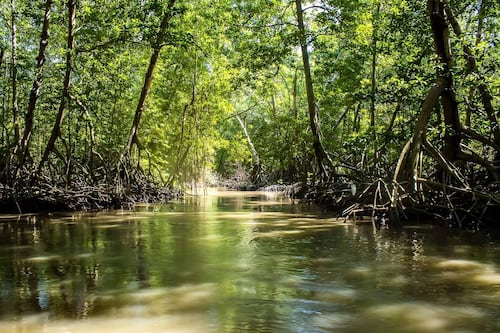
Mexico holds the fourth-largest mangrove coverage worldwide, boasting 51,610 square kilometers of these ecologically vital ecosystems. These areas, where land meets sea, are characterized by dense clusters of mangrove trees with intricate root systems.
Mangroves play a critical role in safeguarding diverse flora and fauna, acting as natural buffers against hurricanes and storms, preventing erosion, filtering water, and capturing significant amounts of carbon dioxide. Despite their importance, these lush yet fragile environments represent only 0.4% of the planet's forests, with 123 countries hosting them.
Beyond their biological significance, Mexican mangroves have become attractive tourist destinations. Their beauty and dense vegetation provide sanctuary for hundreds of bird species and other wildlife, with some areas even exhibiting bioluminescence. Popular spots include the La Encrucijada Biosphere Reserve in Chiapas, a vast area with 11 rivers forming coastal lagoons and esteros, home to four types of Mexican mangroves and unique wildlife like spider monkeys and jaguars. Ecotourism cooperatives offer boat tours of this natural wonder.
Another notable location is the Laguna de Manialtepec in Oaxaca, a 15-kilometer-long lagoon where fresh, salt, and thermal waters converge. Surrounded by red and white mangroves, it is a haven for numerous bird species, mammals, and reptiles. The lagoon also offers opportunities for nocturnal tours to witness bioluminescence.
DistantNews Editorial
Originally published by El Universal in Spanish. Translated, summarized, and contextualized by our editorial team with added local perspective. Read our editorial standards.
More Stories

From Our Blog

What Press Freedom Means for the News You Read

What Gets Lost (and Found) When News Is Translated

The Critical Role of Diaspora Media in Global News

What Travellers Should Know About Countries with Restricted Press

A Digital Nomad's Guide to Following Local News
