


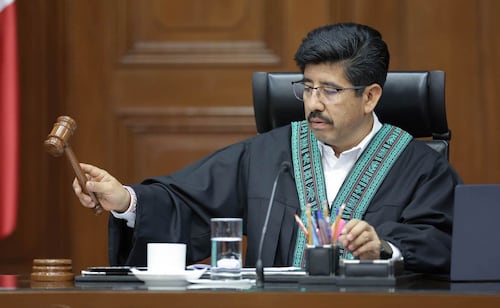
Mexico's Supreme Court clears backlog, president says
Translated from Spanish, summarized and contextualized by DistantNews.
At a glance
News
Sources not specified
New plan
- Mexico's Supreme Court President Hugo Aguilar Ortiz announced significant progress in clearing the backlog of cases inherited from the previous court.
- Aguilar stated that only 56 out of 1,471 inherited cases remain, with the current court resolving cases received since September 1, 2023.
- He also emphasized the court's commitment to building a more just and peaceful Mexico, while calling for constructive criticism.
Mexico's Supreme Court is making strides in clearing a substantial backlog of cases, according to court president Hugo Aguilar Ortiz. Speaking at the start of the court's second ordinary session, Aguilar highlighted that the current judicial body has resolved 2,243 cases in total, with only 56 of the 1,471 inherited cases from the previous court remaining.
We are 56 cases away from clearing the backlog we inherited and we are already resolving cases received since September 1.
Aguilar, who was elected to the High Court as the top candidate in Mexico's first judicial election, noted the significant reduction in workload. He stated that while each judicial panel previously handled an average of 147 cases, this number has dropped to about 54 cases per panel. The court is now addressing both inherited cases and new ones received since September 1, 2023.
There are voices that predict failure and bet on confrontation.
The court president also touched upon the court's role in fostering a more just and peaceful Mexico. He acknowledged the importance of criticism and scrutiny but urged for constructive feedback, cautioning against confrontation, discrimination, or racism. Aguilar shared insights from his recent visits to various regions, where he found a strong commitment from citizens to work with the court towards achieving genuine justice accessible to the people.
Constructive criticism is more useful, which is not based on confrontation, discrimination, or even racism.
DistantNews Editorial
Originally published by El Universal in Spanish. Translated, summarized, and contextualized by our editorial team with added local perspective. Read our editorial standards.
More Stories


From Our Blog

What Press Freedom Means for the News You Read

What Gets Lost (and Found) When News Is Translated

The Critical Role of Diaspora Media in Global News

What Travellers Should Know About Countries with Restricted Press

A Digital Nomad's Guide to Following Local News
