

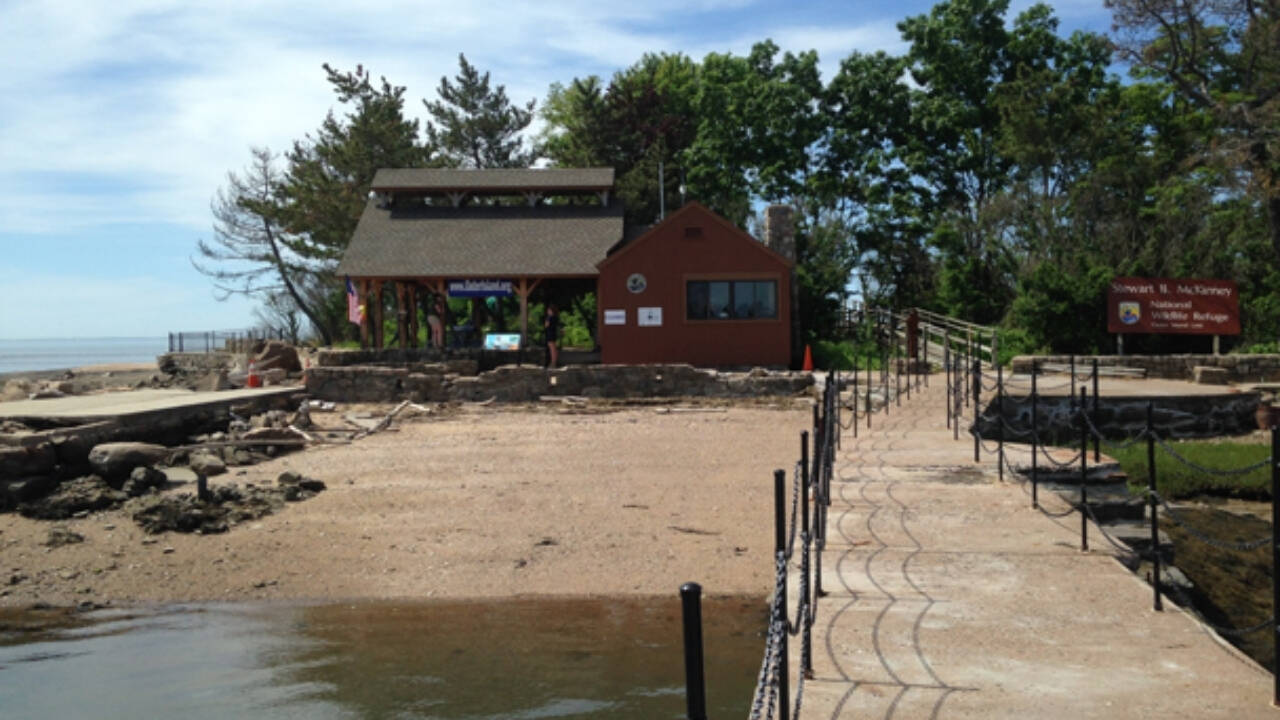
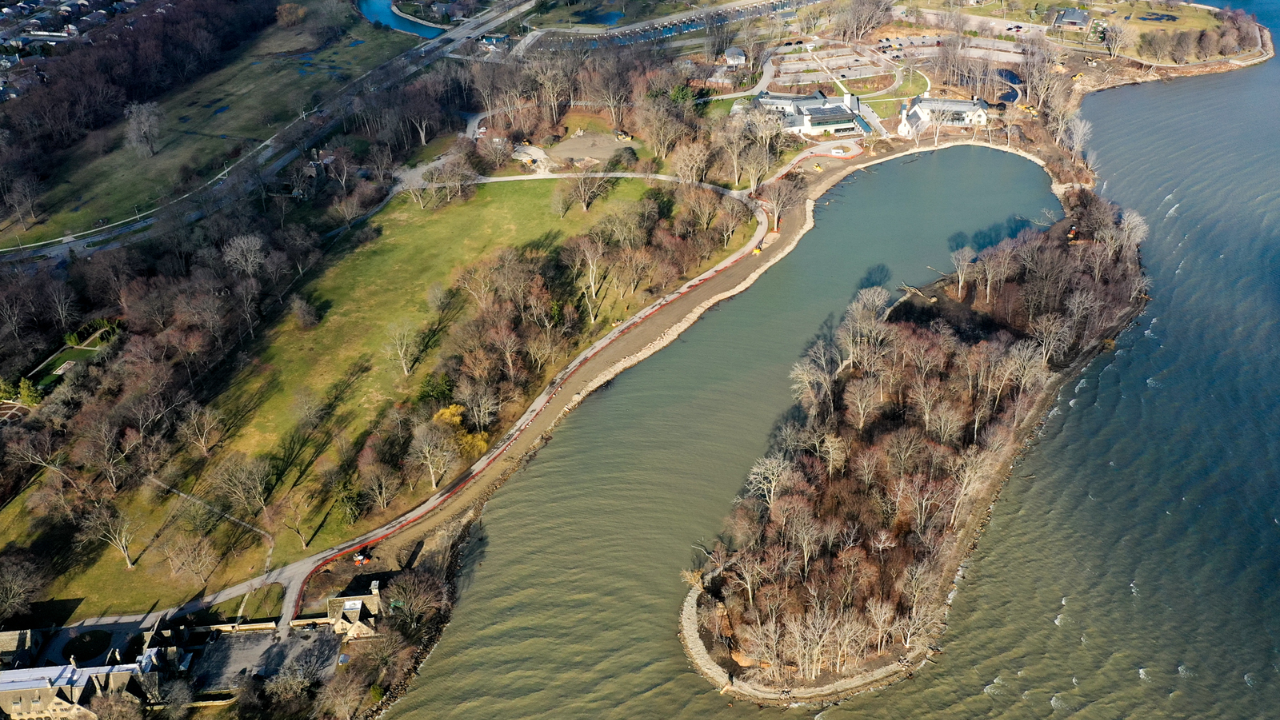
Michigan's historic Ford House replaces concrete shoreline with natural habitat
Translated from English, summarized and contextualized by DistantNews.
At a glance
News
Official statement
New plan
- A $7 million project is restoring over a mile of concrete shoreline at Michigan's historic Ford House on Lake St. Clair.
- The initiative replaces artificial defenses with natural wetlands, living shorelines, and fish habitats to revive coastal ecosystems.
- This effort aims to correct the extensive shoreline hardening prevalent in Michigan, which harms native aquatic species.
Decades of concrete defenses along Michigan's Lake St. Clair are being dismantled in a significant environmental restoration project at the historic Edsel and Eleanor Ford Estate. The $7 million initiative is transforming more than a mile of hardened waterfront into a functional ecosystem, replacing artificial structures with natural wetlands, living shorelines, and vital fish habitats.
Funded by NOAA Fisheries, the project will restore 17.5 acres of coastal marsh, nearshore waters, and forested wetland. This comes as a NOAA Fisheries report highlights that approximately 99.9 percent of Michigan's Lake St. Clair coastline is hardened with concrete slabs, seawalls, and rock barriers. While these structures prevent erosion, they eliminate the crucial shallow coastal areas that native aquatic species depend on for spawning, breeding, and shelter.
"The hardened shoreline essentially eliminates that nearshore habitat that’s important for fish spawning, breeding, and nursery areas," explained NOAA Marine Habitat Resource Specialist Terry Heatlie in a NOAA Fisheries report. "It’s also tough on turtles and other species that need to move between the land and water." Heatlie noted a stark contrast between the U.S. and Canadian sides of Lake St. Clair, where less shoreline hardening on the Canadian side supports a greater number and diversity of fish.
The Ford House project involves removing tons of concrete and introducing nature-based solutions. These include "lunkers", wooden structures that provide protected resting areas for fish, and underwater timber logs to create complex shelters. Gentle slopes are also being constructed to allow safe passage for turtles and amphibians between land and water. The restoration encompasses 5.5 acres of coastal marsh, 8 acres of improved nearshore open water, and 4 acres of forested wetland cleared of invasive brush, all designed to support key Great Lakes fish species.
The hardened shoreline essentially eliminates that nearshore habitat that’s important for fish spawning, breeding, and nursery areas. It’s also tough on turtles and other species that need to move between the land and water.
DistantNews Editorial
Originally published by Times of India in English. Translated, summarized, and contextualized by our editorial team with added local perspective. Read our editorial standards.
More Stories

From Our Blog

What Press Freedom Means for the News You Read

What Gets Lost (and Found) When News Is Translated

The Critical Role of Diaspora Media in Global News

What Travellers Should Know About Countries with Restricted Press

A Digital Nomad's Guide to Following Local News
