


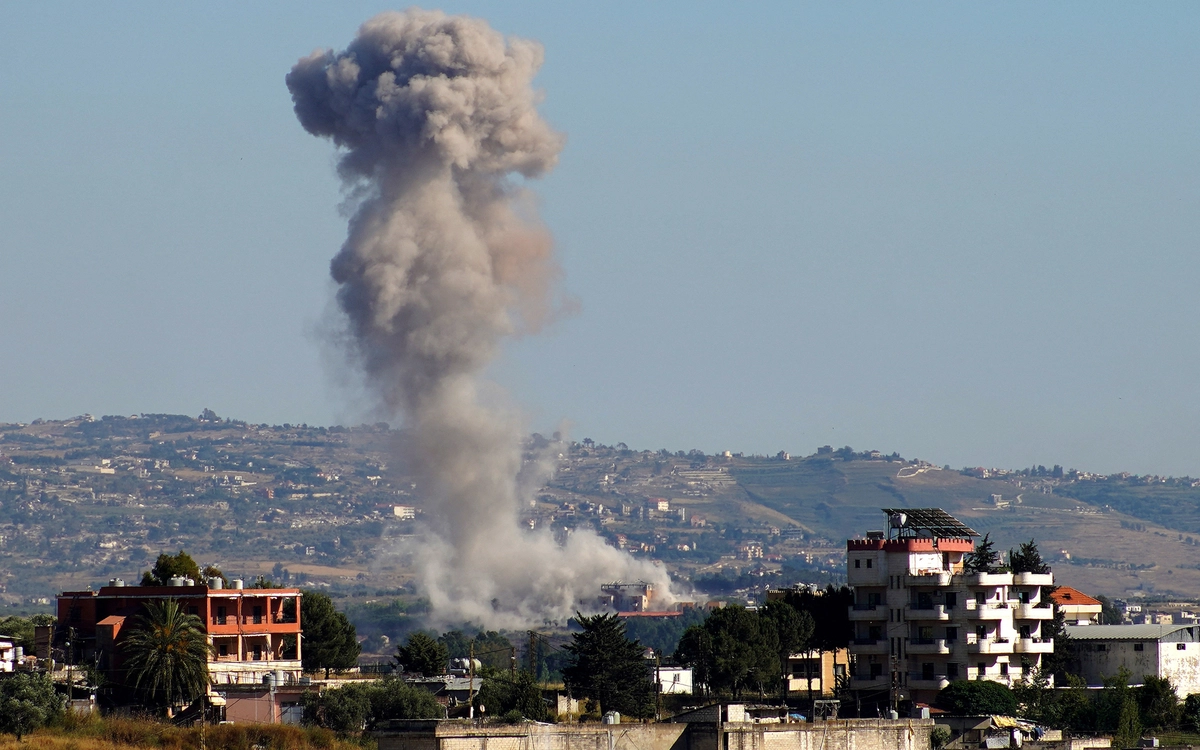
Middle East Tensions Rise: Hezbollah Rejects Ceasefire, Iran Announces Hormuz Fees
Translated from Vietnamese, summarized and contextualized by DistantNews.
At a glance
News
Sources not specified
Ongoing story
- Hezbollah rejected a ceasefire with Israel, demanding a full withdrawal and calling Lebanon's negotiations a "farce."
- An Israeli soldier was killed by a Hezbollah anti-tank missile in southern Lebanon, marking the first fatality since a reported ceasefire.
- Iran stated it will charge "service fees" for ships passing through the Strait of Hormuz, not transit fees, to cover security and other services.
Hezbollah has publicly rejected a ceasefire agreement with Israel, demanding a complete Israeli withdrawal from Lebanon. The group's leader, Naim Qassem, dismissed the reported truce as a "farce" and urged the Lebanese government to cease negotiations. He asserted that Israeli settlements would not be safe as long as Lebanese villages remain under attack and their residents are killed.
The ceasefire must be comprehensive and not allow the Israeli enemy to kill freely.
This defiance comes despite Lebanon and Israel announcing a ceasefire on June 3-4 in Washington. The announcement was immediately followed by news that an Israeli soldier had been killed by a Hezbollah anti-tank missile in southern Lebanon. The Israeli military confirmed the death, noting it was the first Israeli fatality in Lebanon since the reported ceasefire took effect.
Meanwhile, Iran has announced its intention to impose "service fees" on vessels transiting the Strait of Hormuz. Deputy Foreign Minister Kazem Gharibabadi clarified that these are not transit fees but payments for services such as maritime assistance, search and rescue, security, and environmental protection in case of pollution. Iran maintains that the strait falls within its territorial waters, asserting sovereign rights over the vital shipping lane in conjunction with Oman.
As long as our villages are not safe, bombed, destroyed, and people killed, the (northern Israeli) settlements will not be safe either.
The U.S. State Department has issued a travel advisory for American citizens in the Middle East, urging continued caution due to escalating regional tensions. The advisory maintains a Level 3 warning (reconsider travel) for Bahrain, Israel, Jordan, Kuwait, Oman, Qatar, Saudi Arabia, and the UAE, while Level 4 (do not travel) remains in effect for Iran, Iraq, Lebanon, Syria, Gaza, and Yemen.
The Strait of Hormuz is entirely within the territorial waters of Iran and Oman, so the governments of the two countries have sovereignty over this maritime route according to maritime law and international law.
DistantNews Editorial
Originally published by Tuổi Trẻ in Vietnamese. Translated, summarized, and contextualized by our editorial team with added local perspective. Read our editorial standards.
More Stories



From Our Blog

What Gets Lost (and Found) When News Is Translated

The Critical Role of Diaspora Media in Global News

What Travellers Should Know About Countries with Restricted Press

A Digital Nomad's Guide to Following Local News

How the Same Story Looks Different in Different Countries
