


Middle East Tensions Send Oil Prices Soaring, Threatening South Korean Economy
Translated from Korean, summarized and contextualized by DistantNews.
At a glance
News
Sources not specified
Context piece
- International oil prices surged past $90 a barrel due to escalating U.S.-Iran tensions, marking a 40-day high.
- The price hike threatens to increase domestic fuel costs and corporate production expenses in South Korea, potentially fueling inflation.
- Concerns are rising about a possible increase in the won-dollar exchange rate and faster-than-expected interest rate hikes by the Bank of Korea.
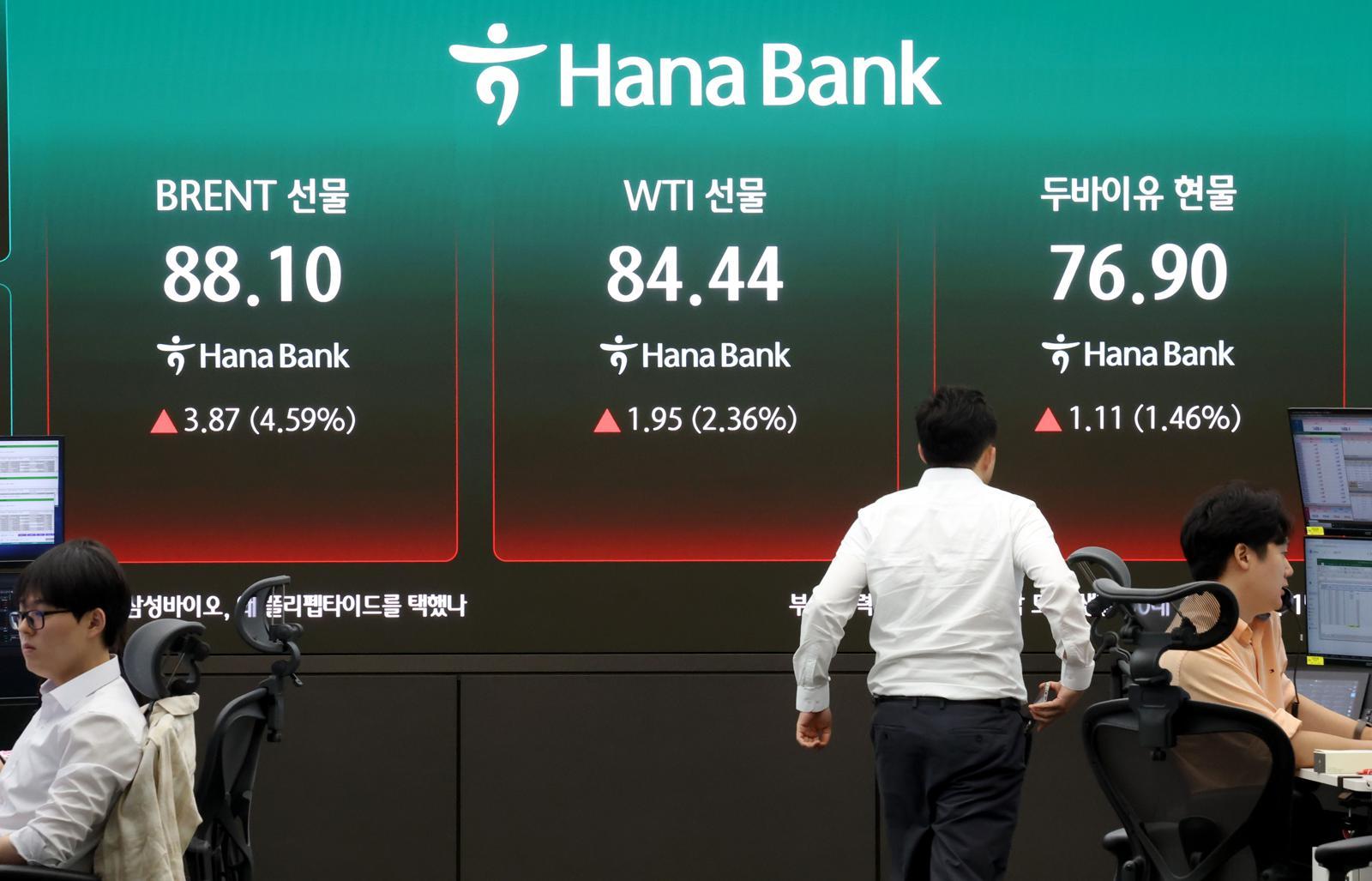
International oil prices have once again shown signs of a sharp increase, surpassing $90 per barrel for the first time in 40 days amid escalating military confrontations between the United States and Iran. Brent crude futures for September delivery rose 2.87% to $90.63 a barrel on the London ICE Futures Exchange as of 3 p.m. Korean time on July 20. This marks the first time the price has exceeded $90 since July 11.
The surge follows a significant drop after the U.S. and Iran signed a memorandum of understanding (MOU) to end hostilities. Brent crude had fallen to $71.57 a barrel on August 1, but has since climbed 26.63% in just 20 days as tensions reignited. West Texas Intermediate (WTI) futures, another major global oil benchmark, also saw a sharp rise, climbing 20.34% from $68.55 on August 6 to $82.49 by the market close on August 17. WTI futures even reached $84.8 a barrel during intraday trading on July 20, the highest since August 12.
Analysts warn that if the conflict intensifies, international oil prices could approach the $120 per barrel mark seen in April. Such a scenario would inevitably lead to higher gasoline prices in South Korea and increased production costs for businesses, further pressuring domestic inflation. The Korea Consumer Price Index (CPI) already rose 3.2% year-on-year in July, the largest increase since December 2023, partly due to a 24.7% jump in petroleum product prices compared to the previous year. Experts predict that average gasoline prices at the pump could soon exceed 2,000 won per liter again.
The escalating oil prices also raise concerns about the won-dollar exchange rate, which has recently hovered below 1,500 won. As oil is primarily traded in dollars, a sustained price increase could weaken the Korean won further. Furthermore, the Bank of Korea might be compelled to accelerate its pace of interest rate hikes to combat inflation. The central bank already raised its benchmark rate by 0.25 percentage points to 2.75% on July 16. Kim Tae-hwang, a professor of international trade at Myongji University, cautioned that the market's growing fear of a prolonged conflict is driving up oil prices, potentially leading to a contraction in domestic consumption and corporate investment.
The market's growing fear of a prolonged conflict is driving up oil prices, potentially leading to a contraction in domestic consumption and corporate investment.
DistantNews Editorial
Originally published by Dong-A Ilbo in Korean. Translated, summarized, and contextualized by our editorial team with added local perspective. Read our editorial standards.
More Stories


From Our Blog

What Gets Lost (and Found) When News Is Translated

The Critical Role of Diaspora Media in Global News

What Travellers Should Know About Countries with Restricted Press

A Digital Nomad's Guide to Following Local News

How the Same Story Looks Different in Different Countries
