


🇳🇱
Netherlands
Migratory Birds in China Squeezed by Disturbed Mudflats
Translated from Dutch, summarized and contextualized by DistantNews.
TLDR
- Millions of migratory birds on the East Asian-Australasian Flyway are facing habitat loss in China due to coastal development and aquaculture.
- While China has banned further land reclamation and increased conservation efforts since 2010, bird populations continue to decline.
- Researchers are investigating the impact of commercial shellfish farming, which disrupts the mudflats crucial for the birds' rest and feeding during their migration.
The vast mudflats of China's southern coast, shimmering under the afternoon sun, are a vital refueling station for millions of migratory birds traversing the East Asian-Australasian Flyway. These birds, journeying from as far as Australia and New Zealand to breed in Siberia, rely on the rich ecosystem of the tidal flats for sustenance. However, this critical habitat is under increasing pressure, threatening one of the world's most endangered migratory routes.
For years, China's rapid industrialization led to extensive land reclamation, shrinking the available resting and feeding grounds for these avian travelers. While the Chinese government has made strides in conservation since 2010, banning further land reclamation and increasing protection efforts, the decline in migratory bird populations persists. This paradox has puzzled researchers like He-Bo Peng, who has dedicated over a decade to studying the phenomenon.
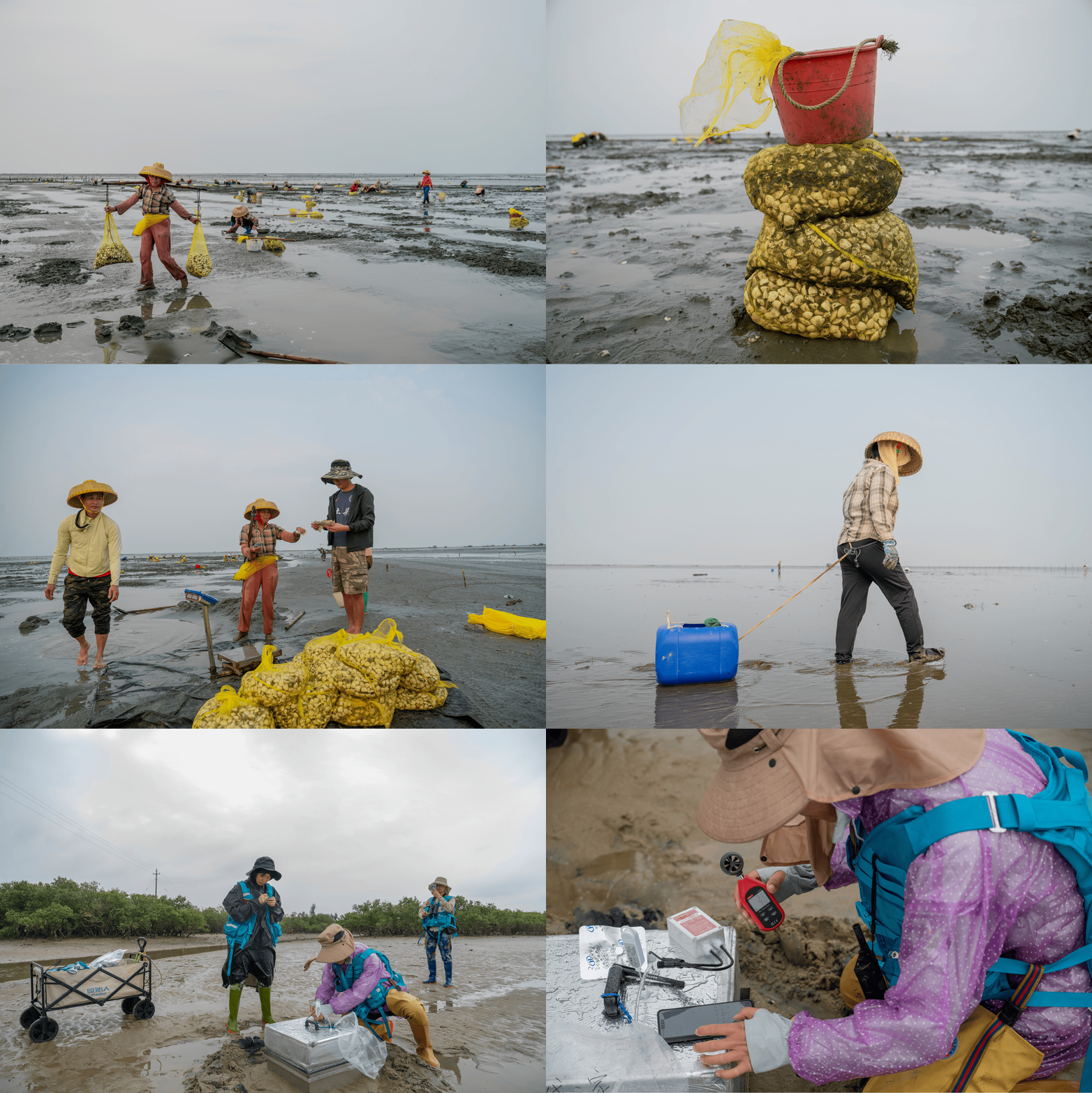
Peng's team meticulously counts birds and analyzes their food sources along the Chinese coast each spring. Their research highlights a significant factor: the impact of commercial aquaculture. China is a global leader in shellfish production, and the intensive farming of mussels, oysters, and other bivalves in tidal areas disrupts the natural mudflats. Even when shellfish are harvested, the remaining smaller ones and the disturbance caused by the farming process itself can impact the food availability for the migratory birds.
This situation presents a unique challenge for China. While the country has made commendable efforts in environmental protection, the economic realities of aquaculture and coastal development continue to pose a threat to biodiversity. From a Chinese perspective, balancing economic development with ecological preservation is a complex, ongoing task. International coverage often focuses on the scale of China's environmental challenges, but local researchers like Peng are deeply invested in finding nuanced solutions that acknowledge both the ecological importance of these habitats and the livelihoods of coastal communities. The fate of these migratory birds is intrinsically linked to China's ability to manage its coastal resources sustainably.
Look, these they found too small to harvest.
DistantNews Editorial
Originally published by NRC Handelsblad in Dutch. Translated, summarized, and contextualized by our editorial team with added local perspective. Read our editorial standards.
More Stories
/s3/static.nrc.nl/wp-content/uploads/2026/04/22125931/230426BIN_2033030239_kdag1.jpg)


From Our Blog

What Gets Lost (and Found) When News Is Translated

The Critical Role of Diaspora Media in Global News

What Travellers Should Know About Countries with Restricted Press

A Digital Nomad's Guide to Following Local News

How the Same Story Looks Different in Different Countries
