


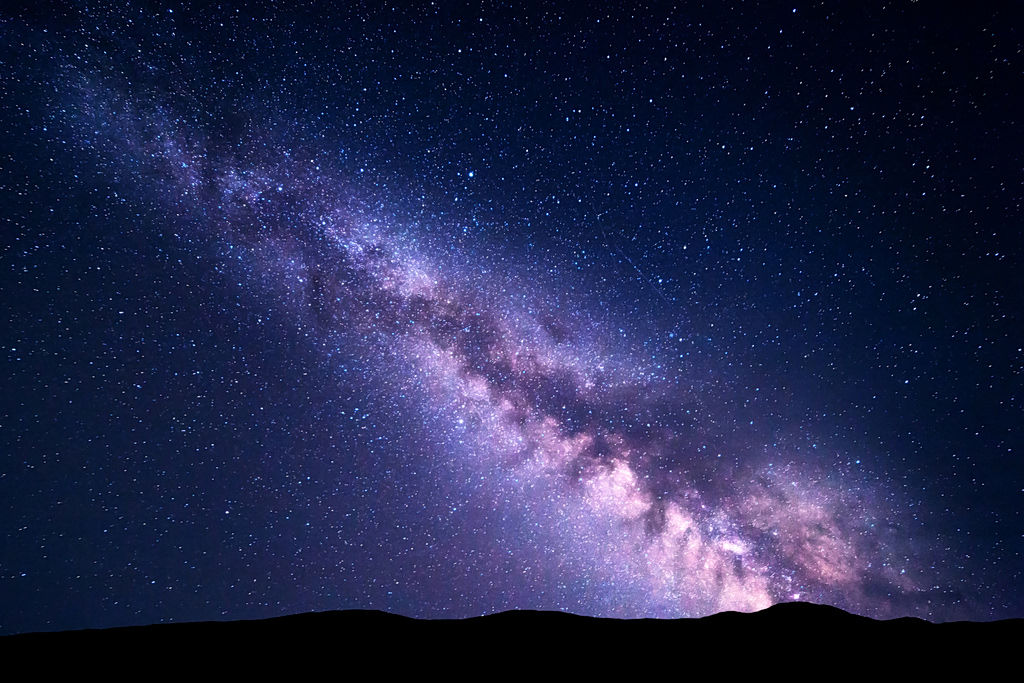
Milky Way flipped over after head-on collision with Gaia Sausage
Translated from Greek, summarized and contextualized by DistantNews.
At a glance
News
Sources not specified
Context piece
- Astronomers suggest our Milky Way galaxy flipped more than 90 degrees after a catastrophic collision with a dwarf galaxy known as Gaia Sausage about 10 billion years ago.
- This ancient merger is believed to have reshaped the galaxy, forming its central bulge and defining its halo structure.
- Researchers used supercomputer simulations and data from the European Space Agency's Gaia mission to support their findings.
Our Milky Way galaxy may have flipped onto its side after a violent collision with a rogue galaxy billions of years before our solar system even formed, astronomers have discovered. The cataclysmic event, estimated to have occurred about 10 billion years ago, involved the Milky Way smashing head-on into a dwarf galaxy dubbed Gaia Sausage.
While the Milky Way gradually absorbed the smaller galaxy's stars, the ensuing chaos likely caused its disk to invert by more than 90 degrees, leading to its current shape, researchers suggest. Supercomputer simulations conducted by astronomers at Durham University indicate that galaxies similar to ours, when colliding with Gaia Sausage, are prone to a "disk inversion" phenomenon that dramatically reorients them over hundreds of millions of years.
This conclusion stems from investigations into the surprisingly slow rotation of stars within the Milky Way's halo, a sparse, spherical region surrounding the galaxy. Most of these halo stars originated in smaller galaxies that merged with the Milky Way over time. Observations from the European Space Agency's Gaia mission show that stars in the Milky Way's disk orbit its center at about 220 kilometers per second, while halo stars move much slower, around 25 kilometers per second.
The Durham researchers' simulations revealed that galaxies acquire slowly rotating halo stars after head-on collisions with neighboring dwarf galaxies like Gaia Sausage, followed by disk inversion. This ancient collision, first identified in 2018 through Gaia mission data, is now considered the last major merger in the Milky Way's history, fundamentally reshaping it and creating its central bulge and halo structure.
DistantNews Editorial
Originally published by Ta Nea in Greek. Translated, summarized, and contextualized by our editorial team with added local perspective. Read our editorial standards.
More Stories



From Our Blog

What Gets Lost (and Found) When News Is Translated

The Critical Role of Diaspora Media in Global News

What Travellers Should Know About Countries with Restricted Press

A Digital Nomad's Guide to Following Local News

How the Same Story Looks Different in Different Countries
