


Mining strikes
Translated from Polish and summarized by DistantNews. Read the original for the full story.
At a glance
In-depth
Sources not specified
Context piece
- The piece examines miners’ strikes in communist Poland, focusing on the protests of 1980 and the suppression of strikes in Upper Silesia after martial law began in December 1981.
- More than 45,000 coal miners joined the December 1981 actions, while nine miners at the Wujek mine were killed and thousands faced medical, disciplinary or legal consequences.
- It also recalls the three-week 1988 strike at the Manifest Lipcowy mine, which the piece describes as a prelude to the Round Table talks.
The communist authorities had hoped to channel the miners’ protests and use them to break up the emerging independent, self-governing trade unions. They even proposed creating separate miners’ unions for the southern and southeastern regions of Poland. The plan failed.
Keep digging, keep digging, keep digging!
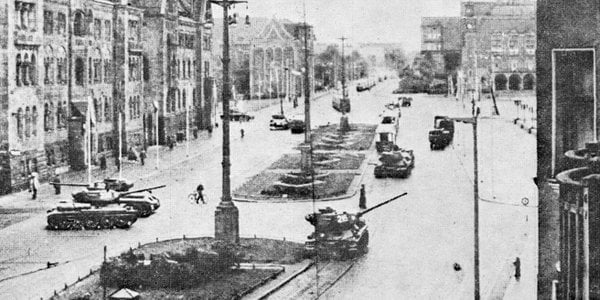
A year and a half later, in December 1981, the same region became the most heavily pacified part of the country. After martial law was imposed, more than 45,000 people took part in strikes across Upper Silesia’s hard-coal mines. Nine miners at the Wujek mine were killed. Another 123 injured people received hospital treatment, while 3,042 sought emergency medical care.
Nearly 1,100 miners lost their jobs through disciplinary dismissal, and 141 faced criminal proceedings. Workers struck at 25 of the region’s 68 mines. Almost 1,000 people were detained, 121 were sentenced, and several hundred appeared before misdemeanor panels, the 24-hour courts used at the time. Nearly 1,500 employees from other plants also lost their jobs.
Through the work, effort and toil of your hands, the People’s Homeland is growing.
The authorities deployed 5,500 Civic Militia officers, including 2,500 brought in from outside Silesia. Local forces included 1,088 members of the Volunteer Reserve of the Civic Militia, and units of the Polish People’s Army also took part. The operation against industrial workplaces involved the militia, army and Security Service on a large, coordinated scale, backed by warnings from the Military Council of National Salvation that severe reprisals would follow.
Coal is the number one Polish export commodity.
Despite the crackdown, or perhaps because of its scale, the region saw the country’s strongest response to martial law. Without communications or central coordination, dozens of companies went on strike independently. Mines, steelworks, transport companies and factories joined the protests, with the largest wave coming on Dec. 14 and 15. The article also recalls that miners at the Manifest Lipcowy mine ended a three-week strike on Sept. 3, 1988, in an event presented as a prelude to Poland’s Round Table talks. Throughout the four decades of the Polish People’s Republic, the rallying cry of the mining industry was: “Keep digging, keep digging, keep digging!”
More coal and steel, and nothing will collapse.
About this summary
Originally published by Rzeczpospolita in Polish. Translated, summarized, and contextualized automatically by DistantNews, with a note on how the source frames the story. Not individually reviewed before publishing. How this works.
More Stories

From Our Blog

News in Translation: What Gets Lost, and How We Keep the Framing

Diaspora Media: How Communities Abroad Follow Home

Traveling Where the Press Is Not Free: How to Read the News There

The Digital Nomad's Guide to Local News

The Same Story, Different Countries: How Coverage Changes at the Border
