

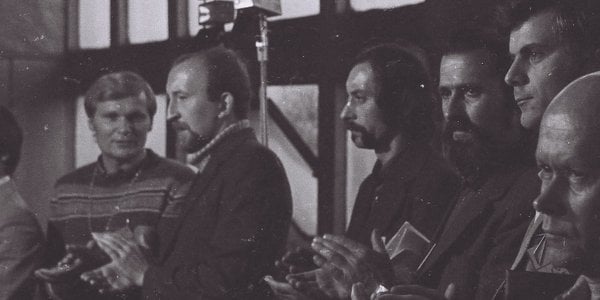

They wanted bread and got tanks: The history of workers’ revolts in communist Poland
Translated from Polish and summarized by DistantNews. Read the original for the full story.
At a glance
In-depth
Sources not specified
Context piece
- Workers’ protests in 1956, 1970 and 1976 began over wages, prices and working conditions but grew into challenges to communist rule in Poland.
- Authorities answered the demonstrations with propaganda, repression and military force, leaving victims and deepening distrust in the system.
- The uprisings weakened the communist government and helped create conditions for the Workers’ Defence Committee, Solidarity and Poland’s later transition from communism.
They did not set out to make a revolution. Polish workers wanted decent pay, fair treatment and the right to express their anger. Again and again, however, protests that began inside factories moved onto the streets, where communist authorities answered with batons, guns and troops.
Poznań in 1956, the Baltic coast in December 1970, and Radom and Ursus in June 1976 became symbols of workers confronting a system that claimed to rule in their name. Each uprising had its own causes and course, but all left behind victims, thousands of personal tragedies and the conviction that the Polish People’s Republic would not solve social problems through dialogue.
Economic grievances usually provided the immediate spark: price increases, falling living standards and deteriorating working conditions. The protests quickly became broader challenges to the way power was exercised. Workers demanded not only bread, but also respect, honesty and the right to be heard. Instead, they encountered propaganda, repression and violence.
The state’s greatest weakness was its repeated decision to turn against people it officially described as the “foundation of the nation’s leading force.” Every protest crushed in blood further damaged the credibility of communist rule and weakened its social support. The Poznań June of 1956 accelerated the retreat from the harshest form of Stalinism. The December 1970 protests brought down Władysław Gomułka’s leadership, while June 1976 helped spur the creation of the Workers’ Defence Committee.
The uprisings shook the foundations of the system and prepared the ground for democratic opposition, the emergence of Solidarity and the changes that eventually brought communism down in Poland. The first major workers’ revolt came in Poznań on June 28, 1956, when employees at the Józef Stalin Works, later and formerly known as the Hipolit Cegielski Works, struck after months of complaints about production quotas, low wages and poor working conditions. A delegation sent to Warsaw had received promises that the main problems would be resolved, but the promises soon proved hollow. The workforce went on strike and marched into Poznań, where employees from other factories rapidly joined them.
foundation of the nation’s leading force
About this summary
Originally published by Rzeczpospolita in Polish. Translated, summarized, and contextualized automatically by DistantNews, with a note on how the source frames the story. Not individually reviewed before publishing. How this works.
More Stories

From Our Blog

News in Translation: What Gets Lost, and How We Keep the Framing

Diaspora Media: How Communities Abroad Follow Home

Traveling Where the Press Is Not Free: How to Read the News There

The Digital Nomad's Guide to Local News

The Same Story, Different Countries: How Coverage Changes at the Border
