


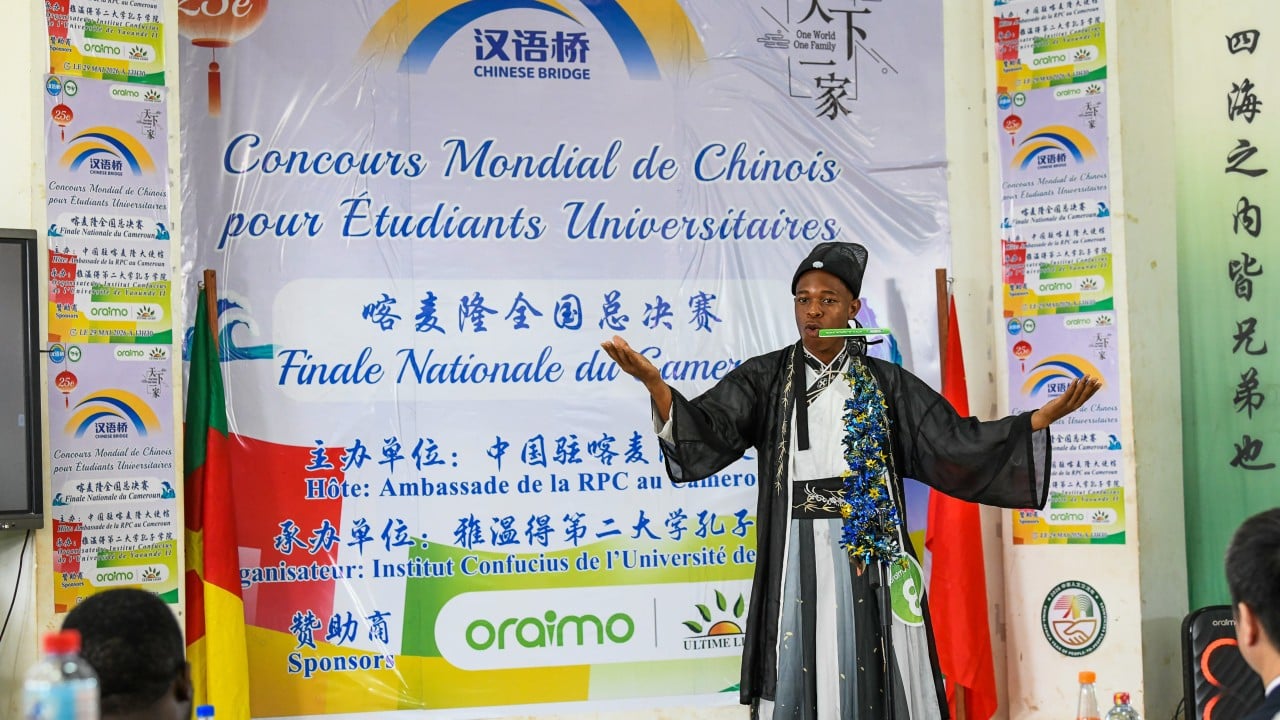
More and more Africans want to learn Chinese. But who will teach them?
Summarized and contextualized by DistantNews.
At a glance
In-depth
Sources not specified
Context piece
- More African nations are incorporating Chinese language into their national curricula.
- Countries like Tunisia, Cameroon, South Africa, Uganda, Tanzania, Zimbabwe, Nigeria, Egypt, and Kenya are expanding Chinese language education.
- A significant shortage of qualified teachers is hindering these expansion efforts.
As China's engagement with African nations deepens, its influence is extending into various sectors, including education. A growing number of African countries are prioritizing Chinese language education, integrating it into their national curricula.
Tunisia pioneered this trend two decades ago, followed by Cameroon in 2012. Since then, South Africa, Uganda, Tanzania, and Zimbabwe have made Chinese an optional subject. Nigeria recently included it in its secondary curriculum, and Egypt and Kenya are in the process of doing the same.
These ambitious educational initiatives, however, are facing a significant obstacle: a shortage of qualified Chinese language teachers. This lack of educators is proving to be a major stumbling block in meeting the rising demand for learning Mandarin across the continent.
Historically, Chinese language instruction in Africa has been primarily facilitated through Beijing-backed Confucius Institutes located at universities and independent schools operated by Chinese nationals. The current push by African governments to embed the language within their own education systems signifies a broader desire to foster deeper ties and understanding with China.
DistantNews Editorial
Originally published by South China Morning Post. Summarized and contextualized by our editorial team with added local perspective. Read our editorial standards.
More Stories


From Our Blog

Countries Without a Free Press: What You Need to Know

What Press Freedom Means for the News You Read

What Gets Lost (and Found) When News Is Translated

The Critical Role of Diaspora Media in Global News

What Travellers Should Know About Countries with Restricted Press
