


Morocco Allowed Migrant Surge into Ceuta, Spanish Intelligence Says, but Didn't Plan It
Translated from Finnish, summarized and contextualized by DistantNews.
At a glance
News
Named sources
Context piece
- Spanish intelligence services assess that Morocco did not orchestrate the mass migration to Ceuta in 2021, but allowed people to cross and politically benefited from the attention.
- An estimated 40,000 to 60,000 people attempted to swim across the border into Ceuta, with nearly 100 drowning.
- Moroccan officials attribute the crisis to a combination of factors, including exploitation of digital environments and human trafficking networks, while Spain's Prime Minister suggests criminal organizations are responsible.
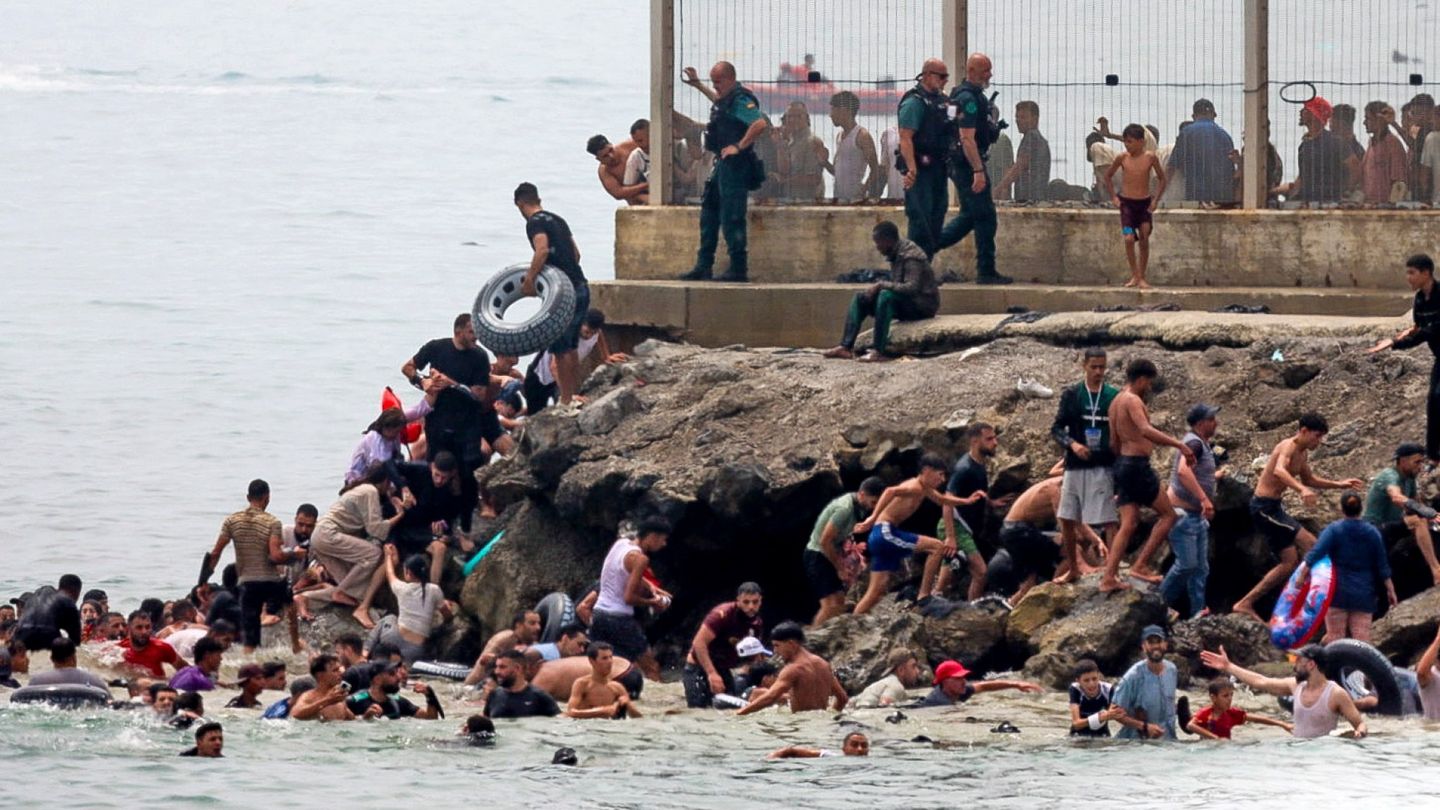
Spanish intelligence services believe that Morocco did not orchestrate the recent influx of migrants into the Spanish enclave of Ceuta, unlike the events of 2021. However, they assess that Moroccan authorities permitted the migrants to proceed and leveraged the international attention gained from the situation for political advantage.
As the situation in Ceuta stabilizes, most of the individuals who entered the Spanish territory without authorization have returned to Morocco. Reports indicate that between 40,000 and 60,000 people attempted to swim across the border at Tarajal, with nearly 100 individuals tragically losing their lives. Simultaneously, approximately 1,100 people tried to enter Melilla, another Spanish enclave. These cities have repeatedly been destinations for migrants seeking to reach Europe from Africa.
The events appear to be the result of multiple contributing factors. Some in Spain initially blamed Morocco, speculating that the crisis was a response to warming relations between Spain and Algeria. Spanish Prime Minister Pedro Sanchez recently met with Algerian President Abdelmadjid Tebboune, marking the first such meeting in four years. Tensions between Morocco and Algeria have long been high, particularly over the Western Sahara dispute, which Morocco considers part of its territory.
Morocco has not officially acknowledged using immigration as a tool for pressure against Spain. In 2021, over 10,000 people arrived in Ceuta after Morocco intentionally relaxed its border controls, a move linked to Spain's hospitalization of a Sahrawi separatist leader. This time, Morocco again benefited, drawing international attention to Ceuta and Melilla as remnants of Spanish colonialism. Morocco does not officially recognize these cities as belonging to Spain.
Moroccan Interior Ministry sources and Spanish Prime Minister Pedro Sanchez have pointed fingers at criminal organizations for instigating the crisis. Morocco's government stated the crisis stemmed from "purposeful exploitation of the digital environment, dissemination of misleading information, the operation of human trafficking networks, and misinterpretation of legal and administrative information, with the aim of making people believe that entry into European territory is easy without legal consequences." The sheer volume of flotation devices used in the sea crossing suggests some level of organization, with messages and videos circulating on WhatsApp and TikTok claiming the Spanish border was open, reportedly inspiring many young people to head towards Ceuta.
The low water level of the Danube may lead to new significant discoveries.
DistantNews Editorial
Originally published by Helsingin Sanomat in Finnish. Translated, summarized, and contextualized by our editorial team with added local perspective. Read our editorial standards.
More Stories


From Our Blog

What Gets Lost (and Found) When News Is Translated

The Critical Role of Diaspora Media in Global News

What Travellers Should Know About Countries with Restricted Press

A Digital Nomad's Guide to Following Local News

How the Same Story Looks Different in Different Countries
