


Mount Kailash: Tibet's Sacred Peak in the Shadow of Himalayan Floods
Translated from German and summarized by DistantNews. Read the original for the full story.
At a glance
News
Named sources
Ongoing story
- Hundreds are missing in the Himalayas following devastating floods, including many pilgrims en route to Mount Kailash in Tibet.
- Mount Kailash is a profoundly spiritual site for Hindus, Buddhists, Jains, and Bön followers, considered the abode of deities and the world's center.
- The floods have disrupted travel routes between Nepal and Tibet, cutting off contact with pilgrims, including four Germans who were on their return journey from the mountain and Manasarovar Lake.
Mount Kailash, a revered peak in Tibet and a significant pilgrimage destination for millions, is now overshadowed by the devastating flash floods that have swept through the Himalayas. Among the hundreds reported missing are many individuals who were journeying to this sacred site, a place of deep spiritual importance for Hindus, Buddhists, Jains, and adherents of the Bön tradition.
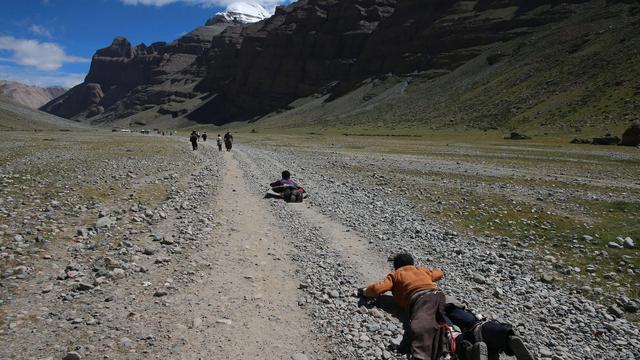
For Hindus, Kailash is the dwelling place of Lord Shiva and Goddess Parvati, while Buddhists associate it with the mythical Mount Meru, the world's axis. The nearly 6,700-meter-high mountain is so sacred that climbing it is strictly forbidden. Instead, pilgrims undertake a ritual circumambulation, known as the Kailash Kora, a roughly 50-kilometer trek around the mountain that is believed to cleanse sins and bestow spiritual merit. The direction of this pilgrimage varies by tradition, with Hindus and Buddhists walking clockwise and Bön followers moving counterclockwise.
Located in western Tibet, Mount Kailash is remote and difficult to access. Nearby lies the equally holy Manasarovar Lake, where many pilgrims bathe or perform purification rituals. Travelers often combine visits to the mountain and the lake, with many international visitors arriving via Nepal. Organized tours, such as those offered by spiritual teacher Jaggi Vasudev (Sadhguru) through his Isha Foundation, are popular, with one such group of nearly 80 participants reportedly including four German nationals who have been out of contact since the disaster.
The recent flash floods have severely impacted the vital roads and border crossings that pilgrims typically use to travel between Nepal and Tibet. The destruction of these routes has led to a complete loss of contact with many travelers, raising grave concerns for their safety amidst the ongoing crisis.
About this summary
Originally published by Die Zeit in German. Translated, summarized, and contextualized automatically by DistantNews, with a note on how the source frames the story. Not individually reviewed before publishing. How this works.
More Stories



From Our Blog

What Gets Lost (and Found) When News Is Translated

How the Same Story Looks Different in Different Countries

The Critical Role of Diaspora Media in Global News

What Travellers Should Know About Countries with Restricted Press

A Digital Nomad's Guide to Following Local News
