

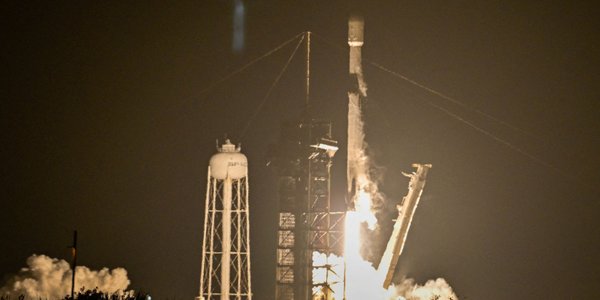

Musk's rocket crashed into the Moon. A new crater may have formed
Translated from Polish, summarized and contextualized by DistantNews.
At a glance
News
Sources not specified
Context piece
- A 4-ton upper stage of a SpaceX Falcon 9 rocket is expected to impact the Moon on August 5.
- The rocket stage has been in space since its launch on September 15, 2025, carrying two lunar landers.
- The impact may create a crater several meters wide, and confirmation will take hours of analysis.
A 13.8-meter long, 3.7-meter diameter upper stage of a SpaceX Falcon 9 rocket, which has been in space since last year, is predicted to crash into the Moon. The rocket stage was part of a launch on September 15, 2025, that carried two lunar landers: Firefly's Blue Ghost-1 and ispace's Hakuto-R Mission 2, Resilience.
While the American Blue Ghost-1 lander successfully touched down on the Moon, making Firefly the first commercial company to achieve a soft landing, the Japanese lander failed. It entered lunar orbit but its landing attempt was unsuccessful, resulting in the object crashing onto the Moon's surface. The upper stage of the Falcon 9 rocket remained in orbit, approximately as far from Earth as the Moon, and was not regularly tracked by satellite and space debris monitoring systems focused on Earth's orbit.
Experts had predicted that the Falcon 9 upper stage might crash into the Moon around 8:35 AM Polish time on August 5. The forecasts suggested that the 4-ton fragment from Elon Musk's SpaceX would hit the Earth's satellite at a speed of 8,690 km/h. SpaceX has stated that the impact with the Moon was unintentional. The rocket was expected to fall near the Einstein crater.
The collision is likely to have ejected lunar dust, potentially creating a crater between several meters and tens of meters in diameter. BBC noted that confirmation of the collision will require astronomers analyzing telescope images for at least several hours.
W wyniku zdarzenia prawdopodobnie doszło do wyrzucenia pyłu księżycowego, na Księżycu mógł powstać krater o średnicy od kilkunastu do kilkudziesięciu metrów.
DistantNews Editorial
Originally published by Rzeczpospolita in Polish. Translated, summarized, and contextualized by our editorial team with added local perspective. Read our editorial standards.
More Stories



From Our Blog

What Gets Lost (and Found) When News Is Translated

The Critical Role of Diaspora Media in Global News

What Travellers Should Know About Countries with Restricted Press

A Digital Nomad's Guide to Following Local News

How the Same Story Looks Different in Different Countries
