


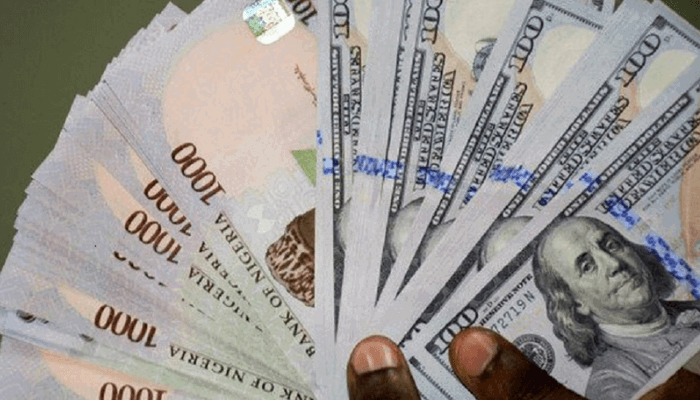
Naira depreciates to N1,425/$ in parallel market
Summarized and contextualized by DistantNews.
At a glance
News
Sources not specified
Context piece
- Nigeria's naira depreciated to N1,425 per dollar in the parallel market on Friday, down from N1,422 the previous day.
- The local currency also weakened slightly in the official market, trading at N1,381.5 per dollar.
- Forex dealers attribute the naira's pressure to rising demand and limited dollar availability, exacerbated by speculation and reduced foreign exchange inflows.
The Nigerian naira weakened further on Friday, depreciating to N1,425 against the U.S. dollar in the parallel foreign exchange market. This marks a decline from N1,422 per dollar recorded on Thursday, signaling continued pressure on the local currency.
Today, I bought a dollar for N1,405 and sold it for N1,424. In the morning, a dollar was sold between N1,415 and N1,419.
In the official Nigerian Foreign Exchange Market (NFEM), the naira also experienced a slight depreciation, trading at N1,381.5 per dollar, according to data from the Central Bank of Nigeria (CBN). This represents a 50 kobo drop from Thursday's official rate of N1,381 per dollar. Consequently, the gap between the parallel and official exchange rates widened to N43.5 per dollar, up from N41 the previous day.
The truth is that dollars are scarce. Importers and parents paying school fees abroad cannot get enough forex from banks, so they come to the parallel market. Since demand is high and supply is limited, the price goes up. Speculation is also worsening the situation.
Forex dealers cited rising demand and a scarcity of dollars as primary drivers of the naira's depreciation in the parallel market. "The truth is that dollars are scarce," said Mr. Audu Yisa, a foreign exchange dealer. "Importers and parents paying school fees abroad cannot get enough forex from banks, so they come to the parallel market. Since demand is high and supply is limited, the price goes up. Speculation is also worsening the situation."
It is simply a case of demand and supply. Nigeria’s oil revenue is low, and foreign investment has reduced, meaning fewer dollars are coming into the country.
Another trader, Mr. Nurudeen Danjuma, linked the depreciation to broader economic factors, including reduced foreign exchange inflows and increased demand for dollars as a store of value. "It is simply a case of demand and supply. Nigeria’s oil revenue is low, and foreign investment has reduced, meaning fewer dollars are coming into the country," Danjuma explained. He added that when people perceive the naira losing value, they rush to hold dollars, further pushing up the parallel market rate.
When people see the naira losing value, they rush to hold dollars to protect their wealth. That panic further pushes up the parallel market rate.
DistantNews Editorial
Originally published by Vanguard. Summarized and contextualized by our editorial team with added local perspective. Read our editorial standards.
More Stories



From Our Blog

How the Same Story Looks Different in Different Countries

What Gets Lost (and Found) When News Is Translated

The Critical Role of Diaspora Media in Global News

What Travellers Should Know About Countries with Restricted Press

A Digital Nomad's Guide to Following Local News
