


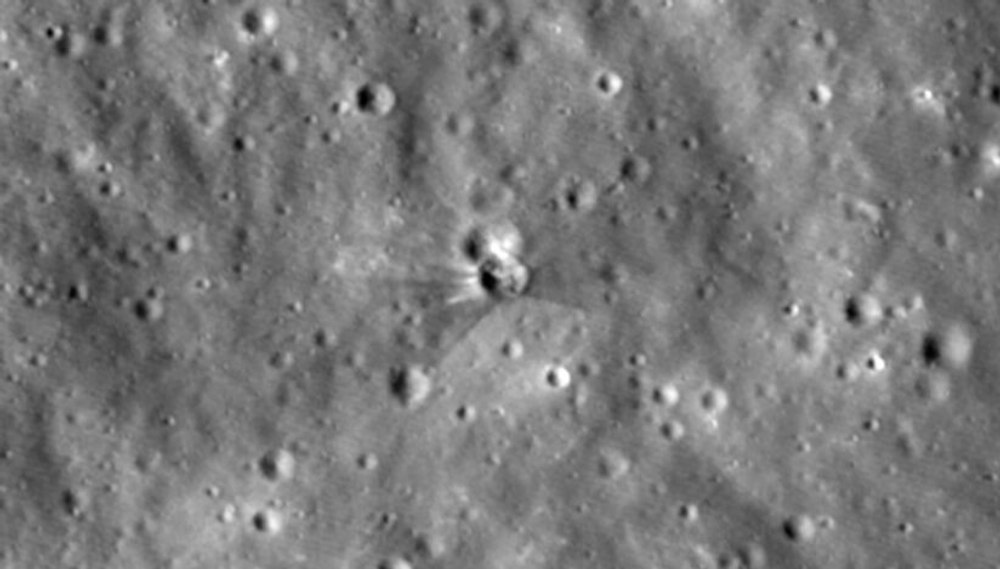
NASA images show crater left by SpaceX rocket crash on Moon
Translated from Romanian, summarized and contextualized by DistantNews.
At a glance
News
Named sources
Context piece
- NASA released new images of a crater on the Moon formed by the impact of a SpaceX Falcon 9 rocket's upper stage.
- The crater, measuring 18 meters wide and less than 3 meters deep, was created by the rocket stage that crashed on August 5.
- The images, captured by the Lunar Reconnaissance Orbiter (LRO), show variations in surface dust and rocks, with darker streaks indicating disturbed surface material and lighter streaks revealing material from deeper within the lunar soil.
NASA has published new images revealing the crater formed on the Moon's surface by the impact of a SpaceX Falcon 9 rocket's upper stage. The rocket stage crashed on August 5, creating a noticeable impact site.
The photographs, taken between August 11 and 12 by NASA's Lunar Reconnaissance Orbiter (LRO), show the crater, which is 18 meters wide and less than 3 meters deep. These images are not the first to document the impact; the Korean space agency had previously released similar imagery on August 6.
The NASA images highlight distinct features radiating from the crater, including darker and lighter streaks. According to NASA, the darker streaks consist of dust and rocks from the lunar surface that have been altered over time by solar wind, galactic cosmic rays, and micrometeorite impacts. The lighter streaks, conversely, are composed of material ejected from deeper layers of the lunar soil.
Capturing these precise images required careful maneuvering by the LRO. The orbiter had to wait six days for the specific location to pass through its field of view. Additionally, the probe needed to be tilted with sufficient accuracy so its camera could be aimed directly at the crater as it flew approximately 100 kilometers above. The camera's activation also had to be timed perfectly; a delay or advance of just 10 seconds would have shifted the target's position by about 16 kilometers within the image frame.
DistantNews Editorial
Originally published by Adevărul in Romanian. Translated, summarized, and contextualized by our editorial team with added local perspective. Read our editorial standards.
More Stories



From Our Blog

What Gets Lost (and Found) When News Is Translated

The Critical Role of Diaspora Media in Global News

What Travellers Should Know About Countries with Restricted Press

A Digital Nomad's Guide to Following Local News

How the Same Story Looks Different in Different Countries
