


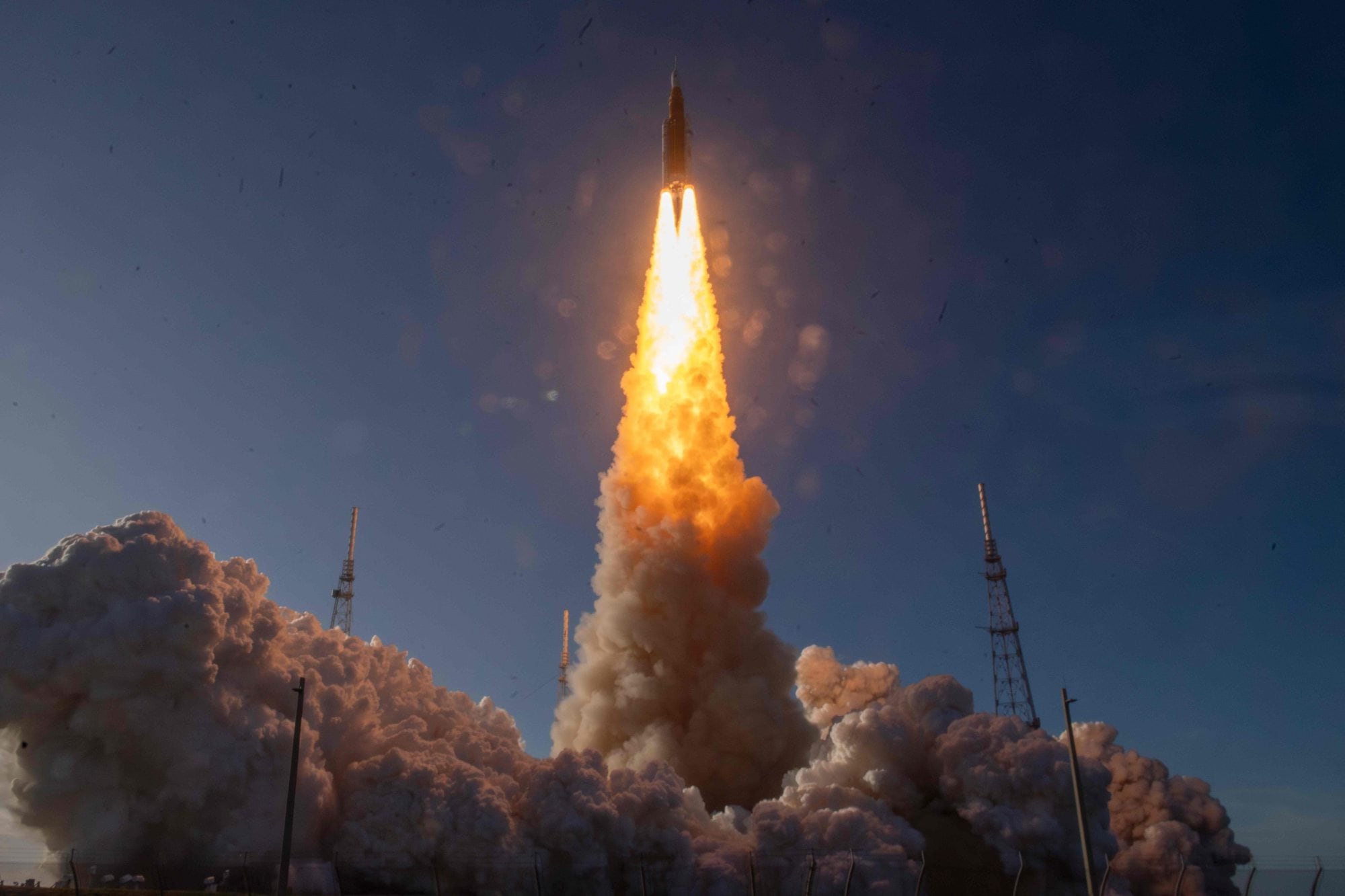
NASA selects new astronauts for Artemis III mission to the Moon
Translated from Spanish, summarized and contextualized by DistantNews.
At a glance
News
From a news agency
New plan
- NASA has advanced its Artemis program by presenting the central stage of the rocket for the Artemis III mission to the Moon.
- The Artemis III mission is scheduled for mid-2027 and aims to return humans to the lunar surface.
- Private companies SpaceX and Blue Origin are developing the lunar landers for the mission.
NASA has taken a significant step in its ambitious plan to return humans to the Moon by unveiling the central stage of the rocket designated for the Artemis III mission. This mission is a pivotal part of the broader Artemis program, which aims to establish a long-term human presence on the lunar surface.
The central stage of the Space Launch System (SLS) rocket is described as the "backbone" of the launch vehicle. This crucial section houses the majority of the rocket's structure, including the liquid hydrogen and liquid oxygen tanks, intertank, and forward structure, all essential for generating the immense power needed for liftoff. This key component was transported from NASA's Michoud Assembly Facility in New Orleans to the Kennedy Space Center in Florida for integration with the rest of the rocket.
The Artemis III mission is currently slated for mid-2027. A critical objective of this phase is the docking maneuver of the Orion crew capsule in Earth orbit. The mission plans to utilize one or two landers to facilitate the descent to the lunar surface. The development of these landers has been entrusted to private aerospace giants: SpaceX is building a lunar version of its Starship rocket, while Jeff Bezos's Blue Origin is developing the Blue Moon Mark 2 lander.
This milestone represents the culmination of extensive testing and development. The complexity of the mission lies in the synchronization of various spacecraft systems provided by different manufacturers. While the official timeline is set, the feasibility of the mid-2027 date hinges on overcoming potential technical challenges identified in propulsion and transport components.
DistantNews Editorial
Originally published by La Nación in Spanish. Translated, summarized, and contextualized by our editorial team with added local perspective. Read our editorial standards.
More Stories


From Our Blog

What Gets Lost (and Found) When News Is Translated

The Critical Role of Diaspora Media in Global News

What Travellers Should Know About Countries with Restricted Press

A Digital Nomad's Guide to Following Local News

How the Same Story Looks Different in Different Countries
