

National Human Rights Commission denounces obstetric violence in Puebla death
Translated from Spanish, summarized and contextualized by DistantNews.
At a glance
News
Official statement
Outcome reported
- Mexico's National Human Rights Commission (CNDH) has denounced obstetric violence leading to the death of an indigenous woman in Puebla.
- The woman received inadequate medical care during labor at an IMSS-Bienestar hospital, resulting in her death and severe complications for her newborn.
- The CNDH has issued a recommendation for IMSS-Bienestar to provide comprehensive reparations to the victims' families.
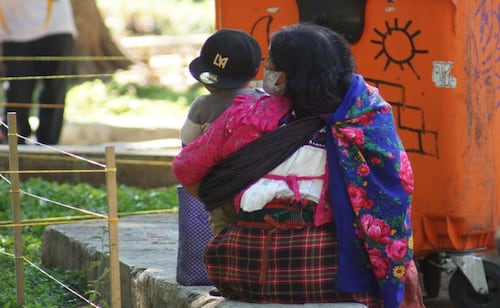
Mexico's National Human Rights Commission (CNDH) has confirmed that an indigenous Nahua woman died after receiving inadequate medical care and experiencing obstetric violence during childbirth at the Hospital de la Mujer y Neonatología of IMSS-Bienestar in Tehuacán, Puebla. The CNDH issued Recommendation 27/2026 to the health organization, demanding comprehensive reparations for the victims.
The case came to light on March 7, 2025, following a news report about the woman's death due to alleged medical negligence. Investigations revealed that on March 2, 2025, the woman, accompanied by a relative, went to the Zoquitlán Community Hospital, also part of IMSS-Bienestar. An ultrasound showed low amniotic fluid, prompting her transfer to the Tehuacán hospital. There, she remained for several hours without adequate monitoring of her labor progress. Complications necessitated an emergency Cesarean section.
The CNDH determined that the delay in timely care prevented the identification of maternal-fetal distress. The newborn suffered severe asphyxia and required ten days of hospitalization. The mother experienced severe obstetric hemorrhage that was not adequately or promptly treated, along with several cardiac arrests. Despite advanced resuscitation efforts by medical staff, her condition worsened, and she died on March 3, 2025. The commission found that the two attending physicians failed to provide appropriate care to prevent irreparable harm.
Furthermore, the CNDH identified inequality linked to her origin. As an indigenous woman from a rural area, she lacked guaranteed access to healthcare services at a facility near her home equipped to handle her pregnancy. As part of its recommendation, the CNDH urged IMSS-Bienestar to immediately manage comprehensive reparations and provide psychological and/or bereavement counseling to the indirect victims. The commission also requested cooperation with the Internal Control Body to follow up on administrative actions against the medical personnel involved. The organization further recommended continuous training on human rights for staff in the relevant departments.
DistantNews Editorial
Originally published by El Universal in Spanish. Translated, summarized, and contextualized by our editorial team with added local perspective. Read our editorial standards.
More Stories

From Our Blog

What Press Freedom Means for the News You Read

What Gets Lost (and Found) When News Is Translated

The Critical Role of Diaspora Media in Global News

What Travellers Should Know About Countries with Restricted Press

A Digital Nomad's Guide to Following Local News
