

Near Tragedy on London-Athens Flight: Runway Overshoot Avoided by Seconds
Translated from Greek, summarized and contextualized by DistantNews.
At a glance
News
Sources not specified
Outcome reported
- A Wizz Air UK flight to Athens narrowly avoided disaster at London Luton Airport in April 2025.
- The Boeing 737 Max departed just 162 meters from the end of the runway due to a miscalculation of takeoff speeds by the pilots.
- The UK's Air Accidents Investigation Branch determined the incident was a "single crew error."
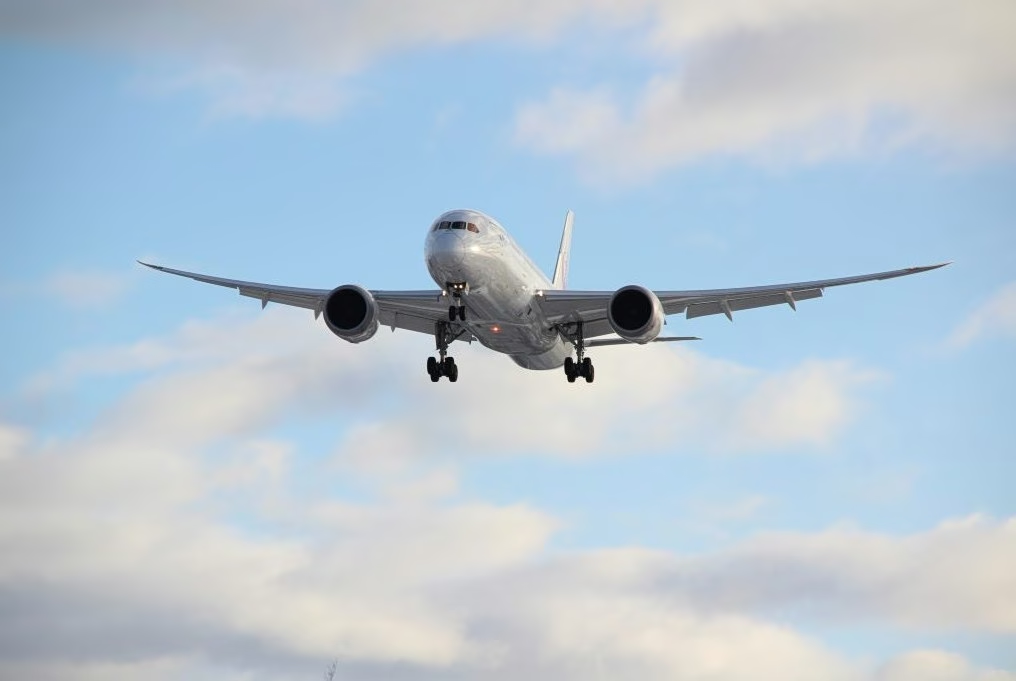
A Wizz Air UK flight bound for Athens came perilously close to a catastrophic accident at London Luton Airport in April 2025, according to a report by the UK's Air Accidents Investigation Branch (AAIB).
The Boeing 737 Max, leased from Ascend Airways, lifted off a mere 162 meters from the runway's end. Had the takeoff been delayed by just two more seconds, the aircraft could have collided with a railway line and a highway situated immediately beyond the runway.
The incident involved flight 5415 to Athens, carrying 162 passengers and a six-person crew. The captain, who had extensive experience, had planned for a full-length runway takeoff. However, following a suggestion from air traffic control, the crew opted for an intermediate taxiway without properly adjusting the critical takeoff speeds in the flight computer.
The AAIB investigation revealed that the pilots failed to correctly input these "V speeds", reference speeds crucial for a safe takeoff, which are calculated based on factors like aircraft weight, runway length, and weather conditions. This error resulted in the aircraft taking off with insufficient thrust (82.1% instead of the required 85.2%). The available takeoff distance from the chosen taxiway was only 1,771 meters, significantly less than the full runway's 2,116 meters.
Radar data indicated the aircraft climbed slower than normal, and airport security footage confirmed the Boeing 737 Max flew extremely low over Luton's buildings. Investigators stressed that if an engine had failed, the aircraft would not have had sufficient margin to safely abort or continue the takeoff. The AAIB report highlighted that the crew accepted a change in takeoff point without properly verifying the performance data entered into the flight computer, leading to insufficient thrust and a delayed liftoff.
A Wizz Air spokesperson stated that safety is the company's absolute priority and clarified that the incident involved an Ascend Airways aircraft, with Ascend being responsible for the crew and procedural adherence. The AAIB classified the event as a "single crew error."
DistantNews Editorial
Originally published by Ta Nea in Greek. Translated, summarized, and contextualized by our editorial team with added local perspective. Read our editorial standards.
More Stories


From Our Blog

What Gets Lost (and Found) When News Is Translated

The Critical Role of Diaspora Media in Global News

What Travellers Should Know About Countries with Restricted Press

A Digital Nomad's Guide to Following Local News

How the Same Story Looks Different in Different Countries
