


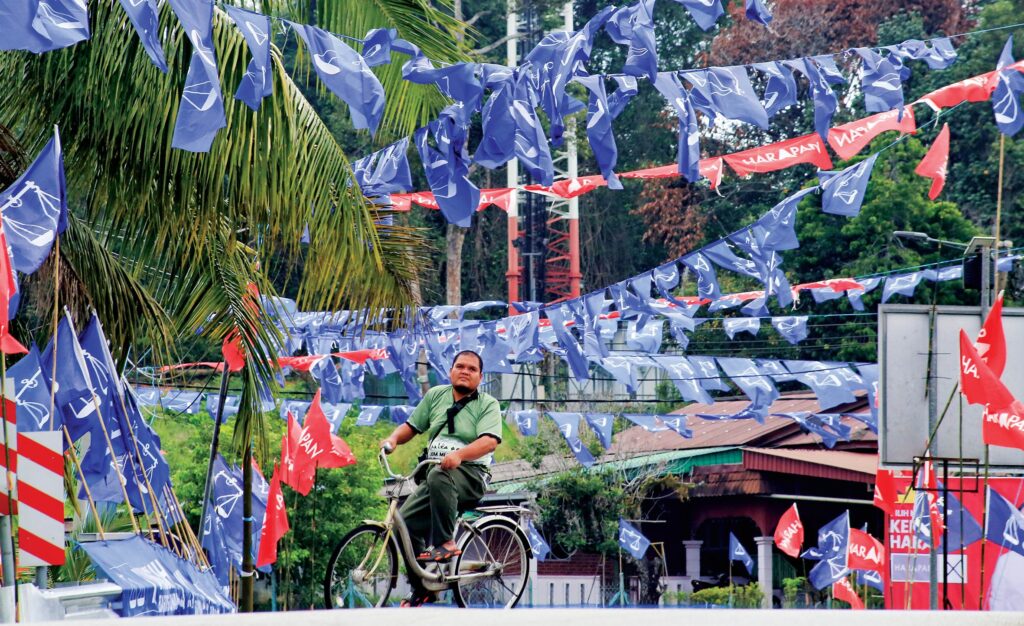
Negeri Sembilan: Birthplace of a New Political Alignment?
Translated from Malay, summarized and contextualized by DistantNews.
At a glance
Analysis
Sources not specified
Context piece
- Negeri Sembilan's state election could signal a new political alignment in Malaysia, testing the viability of a new coalition beyond the post-15th General Election configuration.
- The cooperation between Barisan Nasional (BN) and Perikatan Nasional (PN) in some areas suggests a shift from political animosity towards strategic interests, potentially forming a new bloc.
- This election is crucial for Bersatu in potentially forming a broader, more flexible coalition and for BN in balancing Malay votes with non-Malay support, while Pakatan Harapan must rely on performance rather than opponent's division.
The upcoming Negeri Sembilan state election, though smaller in scale than Johor or Sabah, carries significant political weight. It serves as the first major test for the ruling unity government since the 15th General Election, potentially revealing a new political alignment that could challenge the existing post-election configuration.
While Johor demonstrated the effectiveness of tactical cooperation, Negeri Sembilan will determine if this formula possesses the political legitimacy to extend to the 16th General Election. The current dynamics go beyond mere seat allocation; they represent an electoral realignment based on winnability, rather than strict adherence to post-GE15 political blocs. The understanding between BN and PN in certain constituencies is not just an electoral strategy but a sign that Malaysian politics may be moving from animosity towards strategic interests.
Bersatu's recent statement about forming a new political coalition after the Negeri Sembilan polls should be taken seriously. It signals an ongoing restructuring of the opposition, as Bersatu recognizes the limitations of old formulas in the post-GE15 landscape. The party seeks a broader, more adaptable platform capable of attracting new allies. If this translates into action, Malaysia might witness the emergence of a second-generation post-Sheraton coalition, unbound by current PN, BN, or PH affiliations.
The key question is not whether a new coalition can form, but whether it can forge a shared narrative beyond simply opposing rivals. Enduring modern coalitions are built on clear visions and policy coherence, offering a convincing direction to voters. BN finds itself in a unique position, emboldened by its Johor success and confident in tactical cooperation to prevent Malay vote fragmentation. However, its true strength lies in maintaining non-Malay support, which views BN as part of the unity government. Aligning too closely with PN risks alienating moderate supporters, while distancing itself could split the Malay vote. For Pakatan Harapan, this evolving landscape alters its political calculus, as it can no longer solely rely on divided opposition. PH must now win based on its administrative performance, economic policies, cost of living initiatives, and credibility.
DistantNews Editorial
Originally published by Utusan Malaysia in Malay. Translated, summarized, and contextualized by our editorial team with added local perspective. Read our editorial standards.
More Stories


From Our Blog

What Gets Lost (and Found) When News Is Translated

The Critical Role of Diaspora Media in Global News

What Travellers Should Know About Countries with Restricted Press

A Digital Nomad's Guide to Following Local News

How the Same Story Looks Different in Different Countries
