

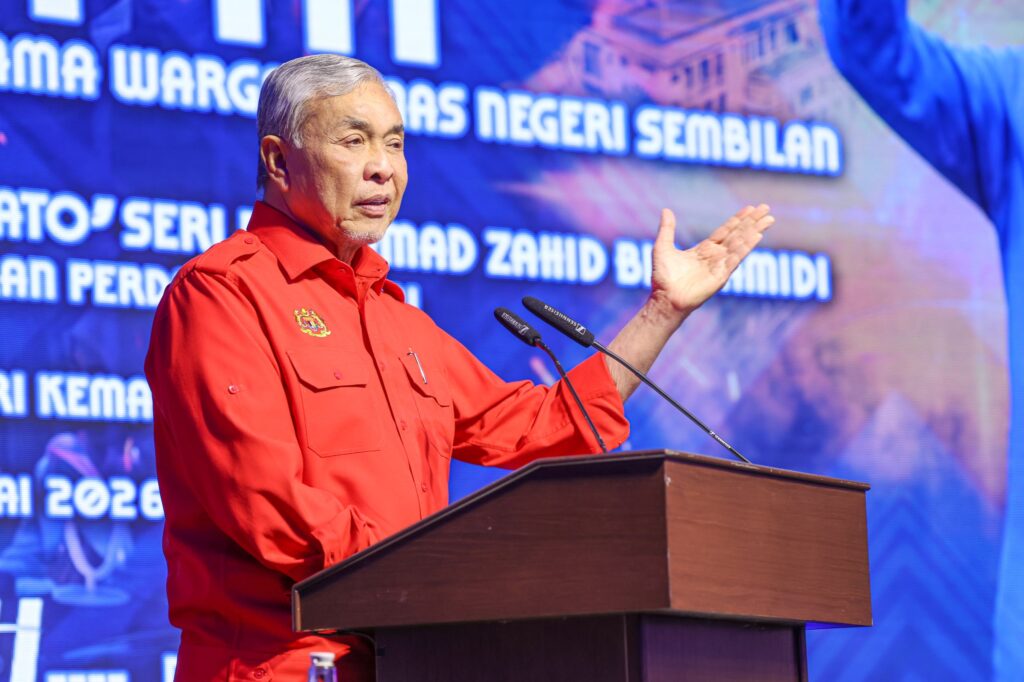

Negeri Sembilan rulers' positions are sovereign powers, not just customary, lawyer says
Translated from Malay, summarized and contextualized by DistantNews.
At a glance
News
Named sources
Context piece
- The rulers of Negeri Sembilan, including the Yang Dipertuan Besar and the Undang, hold supreme governing power under state law and the Federal Constitution.
- A senior lawyer clarified that these positions are not merely customary but sovereign powers protected by the state's constitution.
- Politicians were warned against politicizing the institution of the Negeri Sembilan rulers during the recent state election campaign.
The positions of the rulers in Negeri Sembilan, comprising the Yang Dipertuan Besar, the Undang yang Empat, and the Tunku Besar Tampin, are not merely traditional or customary roles. Senior lawyer Mohd Zainuddin Omar emphasized that these individuals are the supreme governing authorities of the state, operating under established laws and protected by both the Federal Constitution and the Negeri Sembilan State Constitution.
During the recent Negeri Sembilan state election campaign, some parties reportedly attempted to link customary crises with the position of the ruling institution. Mohd Zainuddin clarified that the status of the rulers is that of sovereign power, enshrined in the state's constitution, and cannot be arbitrarily altered or interfered with by partisan politics. This understanding differs from the common perception of 'adat' (custom) within Malay culture, particularly the Adat Perpatih system practiced in Negeri Sembilan.
Prime Minister Datuk Seri Anwar Ibrahim had previously cautioned all participants in the Negeri Sembilan election to refrain from playing on sensitive issues related to royalty, race, and religion (3R). He stressed that while political competition is a part of democracy, it must be conducted with decorum, avoiding slander and the incitement of societal division.
Mohd Zainuddin further explained that when a local custom or practice, including traditional ceremonies, is elevated and codified into law, it ceases to be merely a custom. It becomes a legitimate law within the national legal system, carrying full legal force and enforceability. This legal recognition underscores the distinct and protected status of the ruling institution in Negeri Sembilan.
DistantNews Editorial
Originally published by Utusan Malaysia in Malay. Translated, summarized, and contextualized by our editorial team with added local perspective. Read our editorial standards.
More Stories

From Our Blog

What Gets Lost (and Found) When News Is Translated

The Critical Role of Diaspora Media in Global News

What Travellers Should Know About Countries with Restricted Press

A Digital Nomad's Guide to Following Local News

How the Same Story Looks Different in Different Countries
