


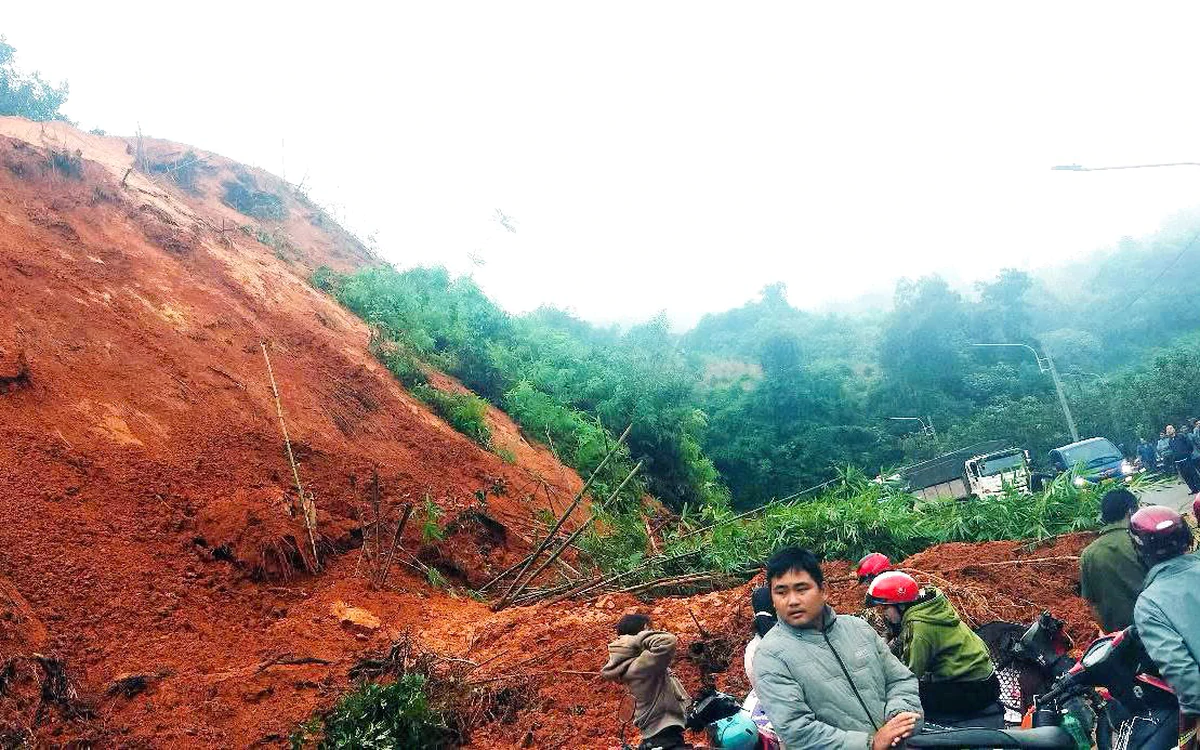

Nepal-China flash floods leave 1,344 dead as missing toll rises
Translated from Vietnamese and summarized by DistantNews. Read the original for the full story.
At a glance
News
Official statement
Ongoing story
- Nepal reported that 1,344 bodies had been recovered and about 5,000 people remained missing after the August 26 flash floods.
- Rescue teams had saved 13,098 people, including more than 300 foreign nationals, while roughly 600 foreigners from 35 countries remained missing.
- The disaster damaged homes, roads, bridges, farmland and power projects, with international teams and governments assisting Nepal’s response.
Nepal’s Foreign Ministry said 1,344 bodies had been recovered after the flash floods that devastated the Nepal-Tibet border region on August 26, while about 5,000 people remained missing.
Search, rescue and relief operations continued in affected areas as of September 5. Authorities said 13,098 people had been rescued, including more than 300 foreign nationals. On September 4, teams rescued a Chinese citizen in Dhunche and a U.S. citizen in Koloni, in Nuwakot district.
About 600 foreigners from 35 countries were still missing. The ministry cautioned that the figures would continue to change as teams searched the disaster zone and verified information.
Nepal’s disaster risk reduction agency, army, police and armed police forces were carrying out the operations. Tunnel-rescue teams from India, China and South Korea continued working with the Nepalese army. Australia sent 15 members of its Disaster Assistance Response Team on September 4, followed a day later by 11 members of Malaysia’s Special Malaysia Assistance and Rescue Team.
Technical personnel and equipment were being deployed to search affected hydropower projects, including Upper Trishuli 1, Upper Trishuli 3A, Upper Trishuli 3B, U216 Haku, Chilime and Langtang. Preliminary assessments found that about 7,570 homes, 32,933 people and 48 government offices had been affected. Around 55 kilometers of roads, 37 road bridges and 68 suspension bridges were damaged. The floods also severely affected about 1,806 hectares of farmland, 13 hydropower projects, a solar power plant and two transmission lines. The affected hydropower projects had combined capacity of about 783 megawatts.
Nepal’s army and engineering teams were rebuilding the Galchhi-Trishuli road by constructing a temporary bridge over the Tadi River. Two cable-pulley systems at Trishuli Indrenighat and Devighat had also begun operating.
Nepal said it had received support from governments and organizations including India, China, Britain, Japan, the United States, Qatar, Singapore, South Korea, Australia, Germany, Malaysia, Thailand, Vietnam and the European Union. The Asian Development Bank, World Bank, United Nations and specialist agencies were also assisting. Forensic teams from India, China, Singapore and South Korea joined Nepalese police to speed up DNA collection and the identification of bodies.
About this summary
Originally published by Tuổi Trẻ in Vietnamese. Translated, summarized, and contextualized automatically by DistantNews, with a note on how the source frames the story. Not individually reviewed before publishing. How this works.
More Stories
From Our Blog

News in Translation: What Gets Lost, and How We Keep the Framing

Diaspora Media: How Communities Follow News From Home

Traveling Where the Press Is Not Free: How to Read the News There

The Digital Nomad's Guide to Local News

The Same Story, Different Countries: How Coverage Changes at the Border
