

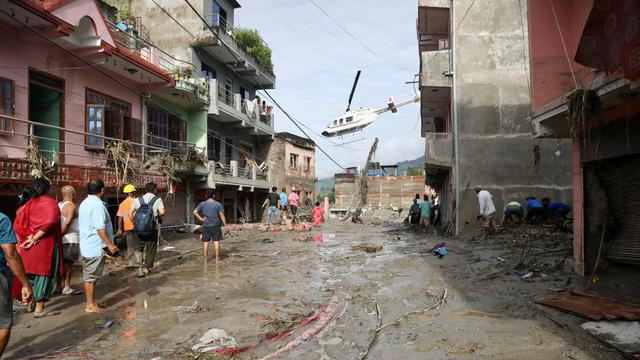

Nepal flood death toll rises to at least 270; 1,300 missing
Translated from German and summarized by DistantNews. Read the original for the full story.
At a glance
News
From a news agency
Ongoing story
- The death toll from a Himalayan flash flood in Nepal has risen to at least 270, with 1,300 people still missing.
- Hundreds of foreign tourists are among the missing, with India also reporting citizens unaccounted for in the crisis zone.
- Nepalese authorities and international aid organizations are conducting extensive search and rescue operations, airlifting survivors and delivering essential supplies.
A devastating flash flood in the Himalayas has claimed at least 270 lives in Nepal, with authorities fearing the toll could rise significantly as 1,300 people remain missing. The disaster has swept away villages and infrastructure, leaving a trail of destruction in its wake.
Among the missing are hundreds of foreign tourists, highlighting the international dimension of the tragedy. India's Ministry of External Affairs has stated that approximately 280 of its citizens are in the crisis area and have not yet been reached. The Nepalese army has been actively involved in rescue efforts, airlifting 336 people, including 45 foreigners, from affected areas like Timure, Dhunche, and Mailung.
Search and rescue operations involve approximately 4,000 soldiers providing assistance, including emergency medical aid. Relief efforts are being coordinated by various national and international bodies. Nepal's Prime Minister Balendra Shah visited the affected region to assess the situation, emphasizing national and international solidarity in the face of the catastrophe.
Essential supplies such as generators, mobile communication towers, medicines, and tents are being delivered to the disaster zone. The World Health Organization has deployed a team with medical equipment for about 10,000 people, while the UN Office for the Coordination of Humanitarian Affairs (OCHA) is facilitating aid delivery. The World Food Programme and UNICEF are also sending trucks with vital supplies to the region.
About this summary
Originally published by Der Spiegel in German. Translated, summarized, and contextualized automatically by DistantNews, with a note on how the source frames the story. Not individually reviewed before publishing. How this works.
More Stories



From Our Blog

What Gets Lost (and Found) When News Is Translated

How the Same Story Looks Different in Different Countries

The Critical Role of Diaspora Media in Global News

What Travellers Should Know About Countries with Restricted Press

A Digital Nomad's Guide to Following Local News
