

Nepal flood: 'From there it was free fall for over 1,000 meters'
Translated from German and summarized by DistantNews. Read the original for the full story.
At a glance
Interview
Named sources
Ongoing story
- A flash flood in the Nepal-Tibet border region has resulted in over 600 deaths and more than 2,400 missing persons.
- The disaster was triggered by a glacial break at an altitude of 5,000 meters, causing a massive rock and ice avalanche.
- Hydrogeomorphologist Christoff Andermann explains the geological processes that led to the catastrophic event.
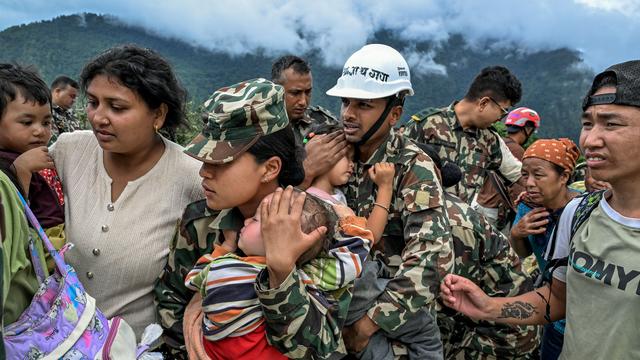
A devastating flash flood in the border region between Nepal and Tibet has claimed the lives of over 600 people, with more than 2,400 still unaccounted for.
The catastrophic event was initiated by a massive glacial break at an altitude of approximately 5,000 meters. A significant portion of the rock face supporting the glacier fractured, dislodging a large section of the ice and rock.
This massive debris, estimated to be over 1,000 meters in height, then plunged into a narrow valley filled with ice and snow. The immense energy generated by this free fall triggered a colossal rock and mudslide.
Hydrogeomorphologist Christoff Andermann, who has studied the region for two decades, explained the extreme conditions. The steep terrain, with a 2,000-meter drop over just 20 kilometers to the border crossing, amplified the destructive power of the avalanche, leading to the devastating flood.
A part of the rock face on which the glacier hangs seems to have broken off and carried a large part of the glacier with it, at an altitude of 5,000 meters. From there it was free fall for over 1,000 meters, into a narrow valley full of ice and snow. This triggered the rock and mud avalanche.
About this summary
Originally published by Die Zeit in German. Translated, summarized, and contextualized automatically by DistantNews, with a note on how the source frames the story. Not individually reviewed before publishing. How this works.
More Stories

From Our Blog

What Gets Lost (and Found) When News Is Translated

How the Same Story Looks Different in Different Countries

The Critical Role of Diaspora Media in Global News

What Travellers Should Know About Countries with Restricted Press

A Digital Nomad's Guide to Following Local News
