


Nepal Floods Raise Questions About the Dangers of Mountain Dams
Translated from Indonesian and summarized by DistantNews. Read the original for the full story.
At a glance
News
Named sources
Ongoing story
- Flash floods and landslides along the Nepal-China border killed 1,130 people, while search operations continued for nearly 4,500 missing people.
- Professor Daanish Mustafa warned that large dams could amplify damage from disasters in the seismically active and glacial Himalayas.
- China attributed the disaster to glacier instability linked to long-term climate warming, while Mustafa called for an independent scientific assessment.
The devastation along the Nepal-China border should serve as a warning to countries building large dams in the Himalayas, according to Daanish Mustafa, a professor of critical geography at King’s College London.
Such a disaster is inevitably coming always in the dynamic glacial and seismically active environment of the high Himalayas and the Karakorams.
The August 26 disaster killed 1,130 people, with nearly 4,500 still missing a week later. In Nepal, 3,916 people remained unaccounted for, including 639 workers assigned to hydropower projects.
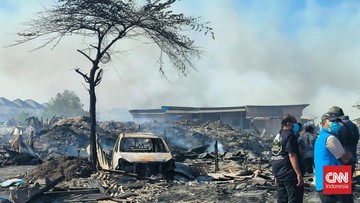
The flooding began after a glacier on Mount Langtang Lirung cracked at an altitude of about 5,200 meters. An avalanche of ice and rocks grew into a massive flow that tore down the valley along the border. Water and mudflows devastated parts of Nepal, including Rasuwa, Nuwakot, Dhading, Kavre and the Kathmandu Valley. On the Chinese side, landslides buried the Gyirong border post in southwestern Tibet.
This was a most unfortunate incident and sadly it was not preventable.
“Such a disaster is inevitably coming always in the dynamic glacial and seismically active environment of the high Himalayas and the Karakorams,” Mustafa said. He described the event as “a most unfortunate incident” that sadly could not have been prevented. He warned that dams in high mountains “simply work to amplify and accentuate the damage from such events,” and urged India, China and Pakistan to treat the disaster as a wake-up call while they build large dams in similar environments.
Dams in high mountains simply work to amplify and accentuate the damage from such events. It should be a wakeup call to all the countries, especially India, China and Pakistan who are in the process of building large dams in the environment.
China’s Foreign Ministry said glacier instability caused by the long-term effects of climate warming triggered the disaster. Spokesperson Guo Jiakun said an ice-and-rock avalanche rapidly slid down a Nepalese slope, eroding the mountainside. Mustafa said the official claims from China and Nepal should be followed temporarily until independent scientific research becomes available. He also recommended public education, evacuation drills, reliable communications and monitoring.
At this point, we must adhere to the official claims of China and Nepal until an independent scientific assessment is available, which may take some time.
About this summary
Originally published by Tempo in Indonesian. Translated, summarized, and contextualized automatically by DistantNews, with a note on how the source frames the story. Not individually reviewed before publishing. How this works.
More Stories



From Our Blog

What Gets Lost (and Found) When News Is Translated

The Critical Role of Diaspora Media in Global News

What Travellers Should Know About Countries with Restricted Press

A Digital Nomad's Guide to Following Local News

How the Same Story Looks Different in Different Countries
