


Nepal hydropower project flood; 8 South Korean workers missing
Translated from Korean, summarized and contextualized by DistantNews.
At a glance
News
Sources not specified
Ongoing story
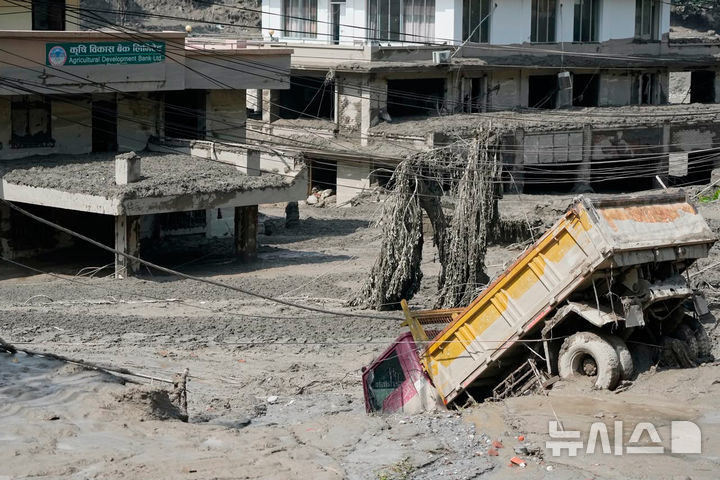
- - A flood near the Upper Trishuli (UT)-1 hydropower project in Nepal's Rasuwa region has resulted in hundreds of missing persons, including eight South Korean nationals.
- The project, a joint venture involving Doosan Enerbility and Korea South East Power, was nearing completion.
- Heavy rainfall and potential glacial lake overflows are suspected causes, with the area known for landslide and flood risks.
A massive flood near the Upper Trishuli (UT)-1 hydropower project in Nepal's Rasuwa region has left hundreds missing, with eight South Korean nationals confirmed among them. The disaster struck the mid-northern Rasuwa area, a region known for its mountainous terrain and susceptibility to landslides and floods during heavy rainfall. Doosan Enerbility, which is handling the Engineering, Procurement, and Construction (EPC) for the project, reported that some employees are currently unaccounted for. As of late Wednesday, 15 South Korean staff were on-site, and communication has been lost with five of them. The company has established an emergency response team and plans to dispatch its CEO and a field response team to the location. Korea South East Power also confirmed that three of its seven on-site employees, responsible for construction management, are out of contact. The UT-1 hydropower project, a 216MW private sector initiative, is a significant undertaking for South Korean companies in Nepal. Construction began in 2022, with a target completion date at the end of this year. The project is situated on the Trishuli River, approximately 70 kilometers north of Nepal's capital, Kathmandu. It is a collaborative effort involving nine major lenders, including the Export-Import Bank of Korea, the International Finance Corporation, and the Asian Development Bank. While heavy rainfall is the immediate cause, local authorities are investigating the possibility that glacial lake overflows from the Tibetan side, triggered by substantial rainfall there, may have contributed to the flood. The area's geological instability, exacerbated by recent seismic activity, is also being considered as a potential factor. The project was set to be the first private power generation project in Nepal involving Korean companies and was expected to supply 20% of Nepal's total electricity upon commercial operation.
As of late Wednesday, 15 South Korean staff were on-site, and communication has been lost with five of them.
DistantNews Editorial
Originally published by Hankyoreh in Korean. Translated, summarized, and contextualized by our editorial team with added local perspective. Read our editorial standards.
More Stories


From Our Blog

What Gets Lost (and Found) When News Is Translated

The Critical Role of Diaspora Media in Global News

What Travellers Should Know About Countries with Restricted Press

A Digital Nomad's Guide to Following Local News

How the Same Story Looks Different in Different Countries
