


Nepal rescue teams race to reach workers feared trapped in hydropower tunnels
Summarized by DistantNews. Read the original for the full story.
At a glance
News
Named sources
Ongoing story
- Nepali rescue teams are searching several hydropower tunnels in Rasuwa and Nuwakot for workers feared trapped after devastating floods and mudflows.
- Collapsed sections, large rocks, damaged roads and rising water have slowed operations, although teams have located one tunnel outlet and are clearing access routes.
- More than 9,200 Nepali Army personnel are deployed across the affected region, where government figures put the death toll above 1,100 and thousands remain missing.
Rescuers have reached about 150 metres into tunnels at several hydropower projects in flood-hit Nepal, but unstable debris and rising water continue to block their path to workers feared trapped underground.
At the Rasuwagadhi Hydropower Project, large rocks have stopped teams after they advanced roughly 150 metres. The search resumed on Wednesday. At Langtang, a joint team of 25 rescuers, including foreign personnel, has entered to a similar depth. Foreign and Nepali teams are also searching at the Chilime project, while the Nepali Army is operating at Upper Trishuli-1 in Haku.
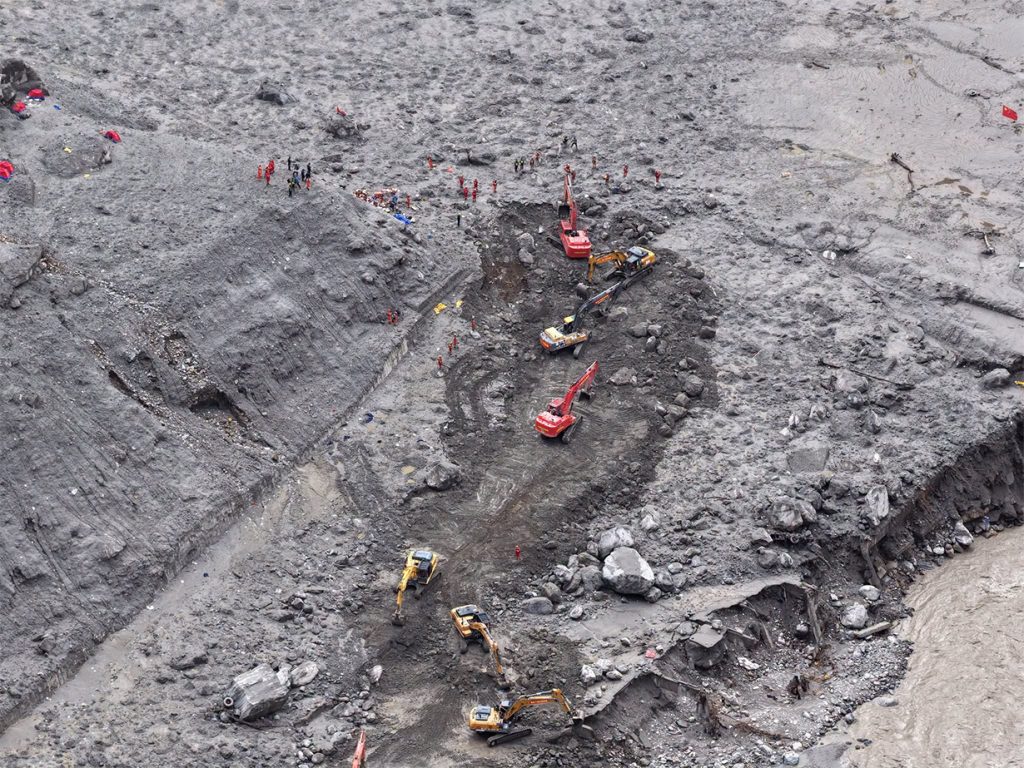
The largest operation is under way at the 60-megawatt Upper Trishuli-3A project. A 93-member team, including army personnel, has used three excavators, a Bobcat, compressors, breakers and controlled blasting to clear debris. The team located the tunnel outlet, but rainfall left about 1.5 metres of water inside overnight. Pumps are draining the tunnel before rescuers continue.
At Upper Trishuli-3B, a 61-member army team, three civilian rescuers and the project’s managing director have identified the project office and residential area. Excavators are building an access road. Wider teams are also patrolling forests, hills, river corridors and settlements, searching for survivors, missing people and residents who may need help. In Timure, where bodies have been recovered, the army has begun sling-load operations to move them toward the Trishuli area.
The operations follow floods and mudflows that swept through the Bhotekoshi-Trishuli river system on August 26, killing more than 1,100 people and leaving thousands missing, according to government figures. The disaster damaged hydropower projects, cut electricity generation and left some workers trapped or unaccounted for.
About this summary
Originally published by Kathmandu Post. Summarized and contextualized automatically by DistantNews, with a note on how the source frames the story. Not individually reviewed before publishing. How this works.
More Stories


From Our Blog

What Gets Lost (and Found) When News Is Translated

The Critical Role of Diaspora Media in Global News

What Travellers Should Know About Countries with Restricted Press

A Digital Nomad's Guide to Following Local News

How the Same Story Looks Different in Different Countries
