


Nepal Seeks Urgent Climate Finance After Bhotekoshi Flood
Translated from English and summarized by DistantNews. Read the original for the full story.
At a glance
News
Named sources
Ongoing story
- Nepal has asked the Fund for Responding to Loss and Damage for urgent financial assistance after the deadly Bhotekoshi flood on August 26.
- A government letter said the disaster caused loss of life, displacement, infrastructure destruction and disruption to essential services, livelihoods and connectivity.
- Officials said the full scale of economic and non-economic damage remains unknown and sought assistance before the fund’s next board meeting, expected on December 10.
Nepal has turned to a global climate finance mechanism for immediate help after the Bhotekoshi flood overwhelmed the country’s ability to respond. Finance Minister Swarnim Wagle and Forests and Agriculture Minister Geeta Chaudhary cosigned the request to the board of the Fund for Responding to Loss and Damage.
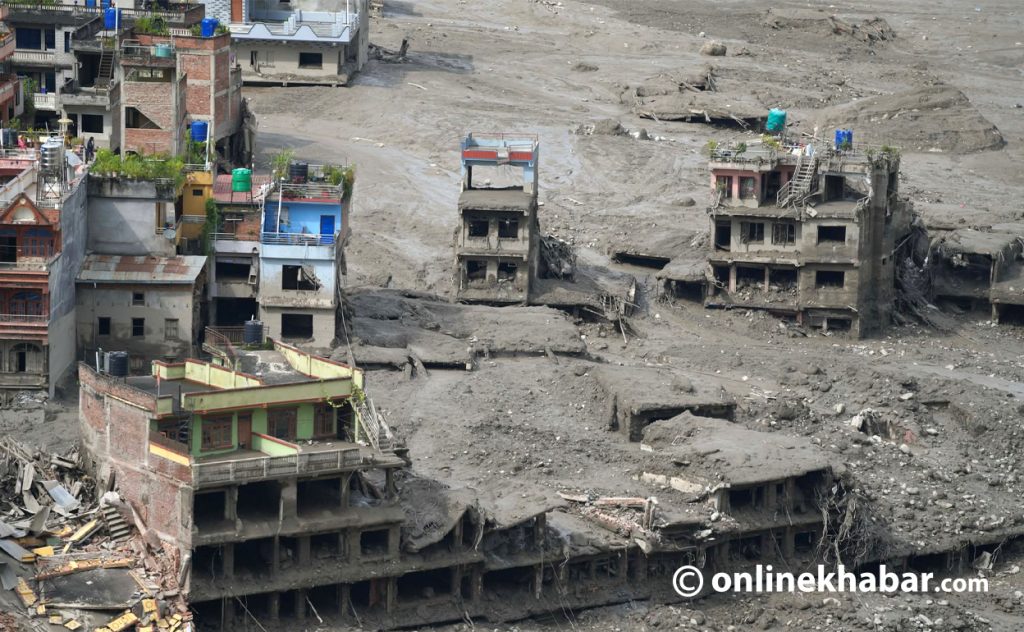
The letter describes a catastrophic flash flood in the Bhotekoshi river basin that caused loss of life, displacement and the destruction of homes and critical infrastructure. It also disrupted essential services, livelihoods, markets and connectivity in downstream communities. Search, rescue, relief and rapid damage assessments remain under way.
We write to draw your urgent attention to the catastrophic flash flood that struck the Bhotekoshi river basin, causing widespread loss of life, displacement, destruction of homes and critical infrastructure, and severe disruption to essential services, livelihoods, markets, and connectivity across downstream communities.
The government said it could not yet calculate the full economic and non-economic loss. “The full scale of economic and non-economic loss and damage has yet to be determined; however, preliminary information indicates that the consequences are extensive and exceed Nepal’s immediate response capacity,” the letter said.
Almost all major donors and global development partners are members of the board, and Nepal’s claims and potential risks are well-established, so the board must compensate us.
Maheshwar Dhakal, a joint secretary at the Ministry of Forests and a member of the fund’s board, said the request did not specify the total losses. He argued that Nepal’s circumstances justified compensation. “Almost all major donors and global development partners are members of the board, and Nepal’s claims and potential risks are well-established, so the board must compensate us,” he said.
The fund was established at COP27 in 2022 and operationalised at COP28. Dhakal said Nepal wanted a response and support before the next board meeting, expected on December 10. He described the request as Nepal’s first appeal to the entity and said approval could provide an example for other vulnerable countries. The government’s letter presents the flood as evidence of how extreme events in high mountain areas can rapidly affect densely populated areas downstream, threatening development, water, food, energy, health, infrastructure, ecosystems and human security.
Since we are genuinely suffering from the adverse effects of climate change, we have approached the board.
About this summary
Originally published by Kathmandu Post in English. Translated, summarized, and contextualized automatically by DistantNews, with a note on how the source frames the story. Not individually reviewed before publishing. How this works.
More Stories

From Our Blog

What Gets Lost (and Found) When News Is Translated

The Critical Role of Diaspora Media in Global News

What Travellers Should Know About Countries with Restricted Press

A Digital Nomad's Guide to Following Local News

How the Same Story Looks Different in Different Countries
