



New Aleksander Bardini biography reveals his tragic past
Translated from Polish and summarized by DistantNews. Read the original for the full story.
At a glance
In-depth
Named sources
Context piece
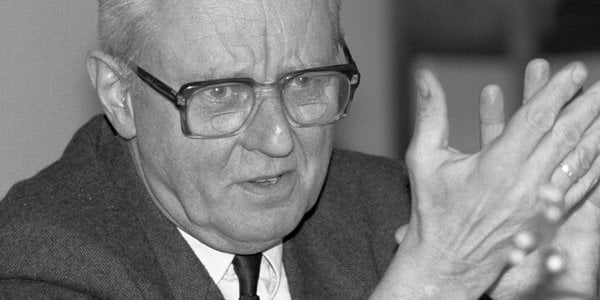
- Grzegorz Kozak’s biography presents Aleksander Bardini as a leading director, actor and teacher who became a television icon in 1970s Poland.
- Bardini advised young performers on his popular Studio 2 program and later appeared in films by Krzysztof Kieślowski.
- His family suffered during the Holocaust, while his own musical career ended in childhood, shaping the tragic history behind his public persona.
Aleksander Bardini could turn a television appearance into a master class long before that phrase became fashionable. In 1970s Poland, his “Dzień autorski Aleksandra Bardiniego” on the Saturday program Studio 2 drew young amateurs seeking advice and crowds gathered around televisions at Warsaw Central Station.
Grzegorz Kozak’s new biography, “Bardini,” portrays an artist who combined the authority of an old master with the credibility of a professor. Bardini worked as a director, actor and teacher of directing and acting. His students included many of the leading figures of Poland’s stage and cinema.
Under normal circumstances, construction of three hotels would already have begun in Wadowice that night.
Jerzy Radziwiłowicz recalled that Bardini’s identity card listed his occupation as “Professor,” an unusual official tribute to the force of his personality. Bardini’s comments and retorts are still quoted. During a recording of Studio 2, news arrived that Karol Wojtyła had been elected pope. Bardini responded, “Under normal circumstances, construction of three hotels would already have begun in Wadowice that night.” The remark reflected his memories of capitalism from childhood in Łódź and from his time in America.
Personality is something that cannot be imitated.
Krzysztof Kieślowski first encountered Bardini while working as a dresser at Warsaw’s Contemporary Theatre. He later cast him in four films. Kieślowski said the doctor in the second part of Dekalog existed because Bardini did, including the character’s deep past. The character had lost loved ones during the war, as Bardini had: his parents and sister were victims of the Holocaust.
Bardini also played a choir conductor in The Double Life of Véronique. His musical career had collapsed in childhood, adding another layer to the biography’s portrait of a celebrated public figure shaped by loss.
The doctor existed only because Bardini existed. If I had not known him, I would not have invented this character, especially with his past, which is highly important because we learn the reasons for the doctor’s actions. And those reasons are deep.
About this summary
Originally published by Rzeczpospolita in Polish. Translated, summarized, and contextualized automatically by DistantNews, with a note on how the source frames the story. Not individually reviewed before publishing. How this works.
More Stories

From Our Blog

News in Translation: What Gets Lost, and How We Keep the Framing

Diaspora Media: How Communities Abroad Follow Home

Traveling Where the Press Is Not Free: How to Read the News There

The Digital Nomad's Guide to Local News

The Same Story, Different Countries: How Coverage Changes at the Border
