


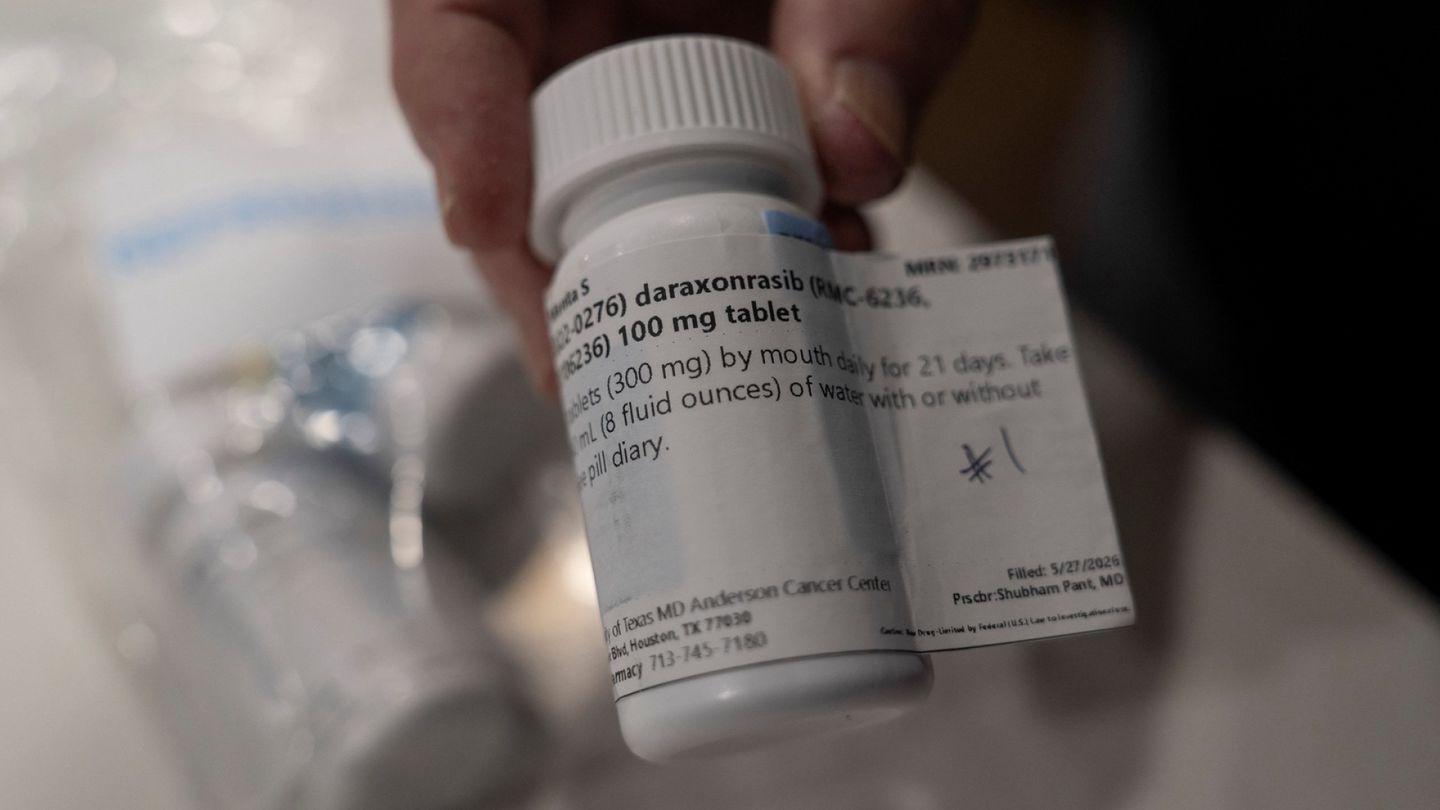
New Drug Nearly Doubles Survival Time for Pancreatic Cancer Patients in Study
Translated from Finnish and summarized by DistantNews. Read the original for the full story.
At a glance
News
Named sources
Approved/passed
- A new targeted drug, daraxonrasib, has shown promise in treating metastatic pancreatic cancer, nearly doubling patient survival time in a study.
- While approved in the U.S., the drug is not yet available in Finland, and experts caution that results are averages and not predictive for individual patients.
- The drug targets a specific KRAS gene mutation, a mechanism previously associated with treatment resistance, offering a new therapeutic approach.
A new targeted drug, daraxonrasib, has demonstrated significant potential in treating metastatic pancreatic cancer, nearly doubling the median survival time for patients in a recent study. Pancreatic cancer is notoriously difficult to treat, making this development particularly noteworthy.
The U.S. Food and Drug Administration (FDA) approved daraxonrasib for advanced pancreatic cancer in late August. However, the drug is not yet available in Finland. Pia Österlund, an associate chief physician in oncology at Tampere University Hospital and a professor at Uppsala University, described the results as promising but urged cautious optimism.
Österlund explained that daraxonrasib does not cure the cancer but can slow its progression and extend life by several months. It is considered a second-line treatment, administered when cancer has advanced despite prior therapies. In the study published in The New England Journal of Medicine, patients receiving daraxonrasib had a median survival of 13.2 months, compared to 6.7 months for those receiving chemotherapy. The study was funded by Revolution Medicines, the drug's developer.
The result is significant.
Tumors shrank by about a third in patients taking the drug, and pain progressed more slowly than with chemotherapy. Österlund called the result "significant." However, she stressed that these are average figures and do not guarantee extended survival for every patient. The study participants were also noted to be in very good health, a condition not met by many pancreatic cancer patients who may not be eligible for second-line treatments due to their illness or overall condition.
The drug's novel mechanism targets the KRAS gene, which regulates cell growth. Mutations in this gene can cause it to remain constantly active, signaling cells to grow uncontrollably. Daraxonrasib aims to silence this signal. Previously, KRAS gene mutations often meant certain treatments would be ineffective, but now this mutation can be leveraged as a therapeutic target. While taken orally, the drug can cause continuous side effects like nausea, diarrhea, fatigue, and skin issues, which may impact daily life differently than intermittent chemotherapy side effects.
If nausea is constant, it significantly impairs quality of life more than more severe nausea that only lasts a day or two after infusion.
About this summary
Originally published by Helsingin Sanomat in Finnish. Translated, summarized, and contextualized automatically by DistantNews, with a note on how the source frames the story. Not individually reviewed before publishing. How this works.
More Stories



From Our Blog

What Gets Lost (and Found) When News Is Translated

The Critical Role of Diaspora Media in Global News

What Travellers Should Know About Countries with Restricted Press

A Digital Nomad's Guide to Following Local News

How the Same Story Looks Different in Different Countries
