


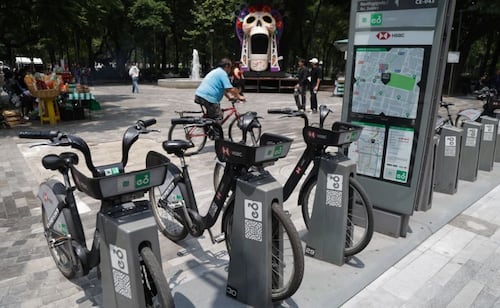
 Image: Carlos Mejía /EL UNIVERSAL
New Ecobici fleet will use GPS to deter theft after 17% of bikes were lost or damaged
Translated from Spanish and summarized by DistantNews. Read the original for the full story.
At a glance
News
Named sources
New plan
- Mexico City’s new 15,000-bike Ecobici fleet will include satellite GPS tracking on every bicycle.
- Mobility Secretary Héctor Ulises García said 17% of the current fleet, or 1,668 bicycles, is out of service because of theft or damage.
- The system will also analyze trip data and create heat maps to identify high-demand areas and guide infrastructure expansion.
Every bicycle in Mexico City’s renewed Ecobici system will carry GPS, a change intended to make the fleet harder to steal and easier to track.
The expanded system will include 15,000 bicycles. Government Head Clara Brugada said only one in 10 current Ecobici bicycles has a satellite locator, but the new contract will extend the technology across the entire fleet.
Currently, only one in 10 bicycles has a satellite locator. Under the new contract, all 15,000 bicycles will have this technology.
Mobility Secretary Héctor Ulises García said 17% of the bicycles are currently out of service. That represents 1,668 bikes that are either stolen or damaged. He also said the new units will feature 26-inch wheels, anodized aluminum components, stainless-steel spokes, durable tires and an adjustable handlebar.
Seventeen percent of the bicycles are out of service at this moment. Stolen and damaged, they total 1,668.
The system will use more than GPS. Officials plan to analyze bicycle journeys and produce heat maps showing where trips are most concentrated. The mobility department will use that information to identify areas with the greatest demand and decide where to expand infrastructure or increase Ecobici’s presence.
García described the new bicycles as among the best available internationally and said they were being brought in for Mexico City residents.
They are the best available on the market internationally, and that is what is being brought here: the best for the people of Mexico City.
About this summary
Originally published by El Universal in Spanish. Translated, summarized, and contextualized automatically by DistantNews, with a note on how the source frames the story. Not individually reviewed before publishing. How this works.
More Stories



From Our Blog

What Press Freedom Means for the News You Read

What Gets Lost (and Found) When News Is Translated

The Critical Role of Diaspora Media in Global News

What Travellers Should Know About Countries with Restricted Press

A Digital Nomad's Guide to Following Local News
