

New Gusen memorial designed to be inclusive and educational
Translated from German, summarized and contextualized by DistantNews.
At a glance
News
Sources not specified
New plan
- A new memorial site in Gusen, Austria, is being designed to honor victims of the Nazi concentration camp.
- Architects aim to create a dignified space that respects both the historical significance and the local residents.
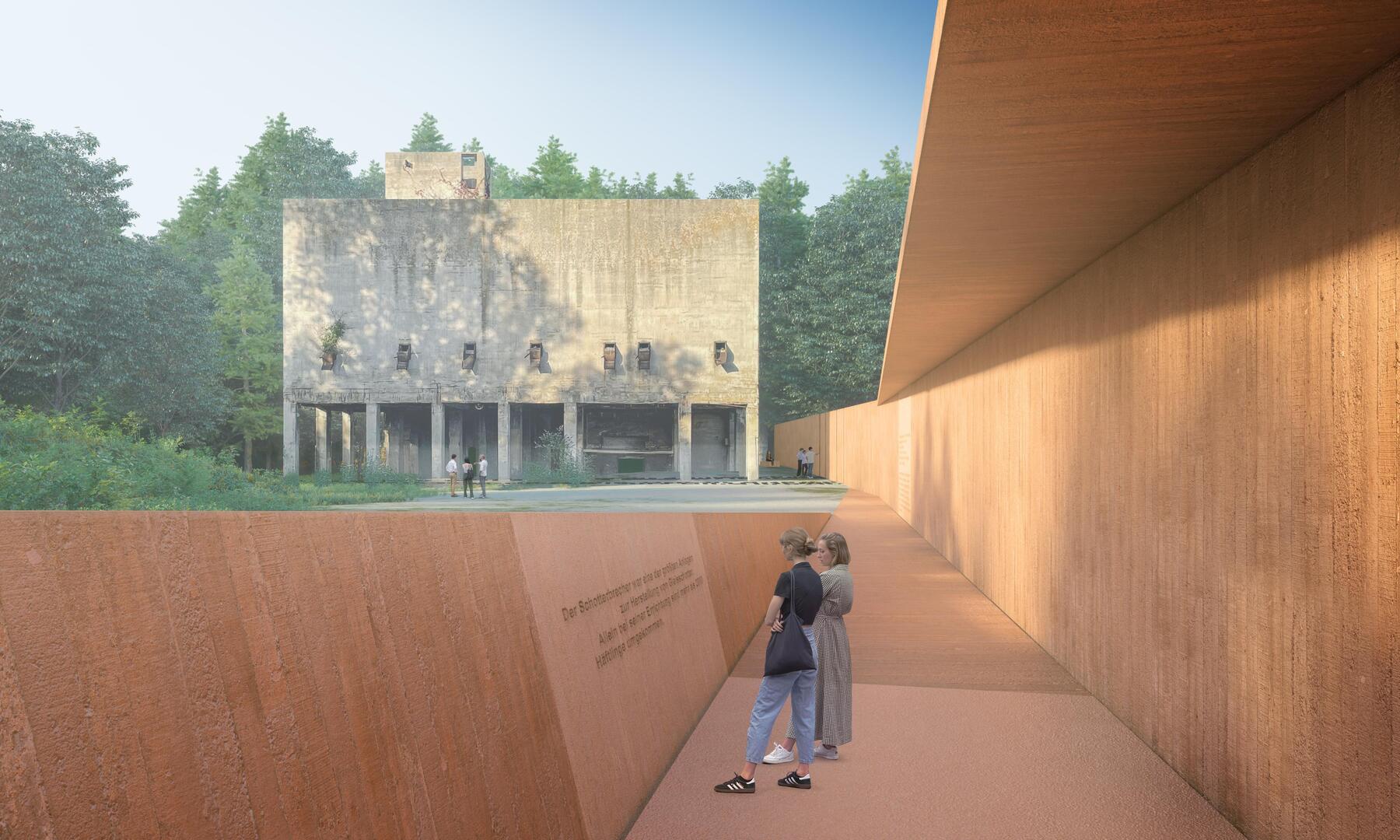
- The design incorporates historical remnants and uses materials like reddish concrete to connect different areas of the memorial.
The architectural firm Querkraft, alongside landscape architect Kieran Fraser and artist Peter Sandbichler, is designing a new memorial site in Gusen, Austria. The project aims to transform the former concentration camp, a site of immense historical trauma, into a place of remembrance and education.
Michael Voit, an architect with Querkraft, described the task as challenging, emphasizing the importance of making historical remnants visible while creating a dignified memorial space amidst existing industrial and residential areas. The design process involved extensive public participation to understand expectations for the site. Voit hopes the memorial will encourage younger generations and those with family ties to the camp to engage with the past.
We definitely did not want to create shock architecture. And that was not the mandate that emerged from the participation process. One should not leave this place broken or frightened. Rather, an inclusive space should be created here.
Voit explained that the design intentionally avoids "shock architecture," aiming instead for an inclusive space where visitors do not leave feeling broken or frightened. The memorial will encompass three key areas: the former camp grounds at Langenstein 1, the existing memorial built by survivors in the 1960s, and the "Bergkristall" tunnel system in St. Georgen. These areas will be linked architecturally and through landscape design, using materials like concrete, similar to the 1960s memorial but with a reddish hue to signify a new time layer. An intervention by artist Peter Sandbichler will also trace the former "Schleppbahntrasse" (transport track), connecting the former camp area to the tunnel entrance in St. Georgen.
The existing memorial from the sixties was built from concrete with rough-sawn formwork. We use the same material for the arrival building and the circular path to create a connection. Only we will color the concrete reddish to add a new time layer.
DistantNews Editorial
Originally published by Die Presse in German. Translated, summarized, and contextualized by our editorial team with added local perspective. Read our editorial standards.
More Stories


From Our Blog

What Gets Lost (and Found) When News Is Translated

The Critical Role of Diaspora Media in Global News

What Travellers Should Know About Countries with Restricted Press

A Digital Nomad's Guide to Following Local News

How the Same Story Looks Different in Different Countries
