


🇫🇮
Finland
New Monkey Species Discovered in Congo
Translated from Finnish, summarized and contextualized by DistantNews.
At a glance
News
Sources not specified
Context piece
- A new monkey species, named "Likweli" (Colobus congoensis), has been discovered in the Democratic Republic of Congo.
- The species is described as rare, shy, and arboreal, with distinctive orange fur around its mouth and a white spot on its back.
- Researchers recommend classifying the species as endangered due to its limited habitat and potential threats from hunting and agriculture.
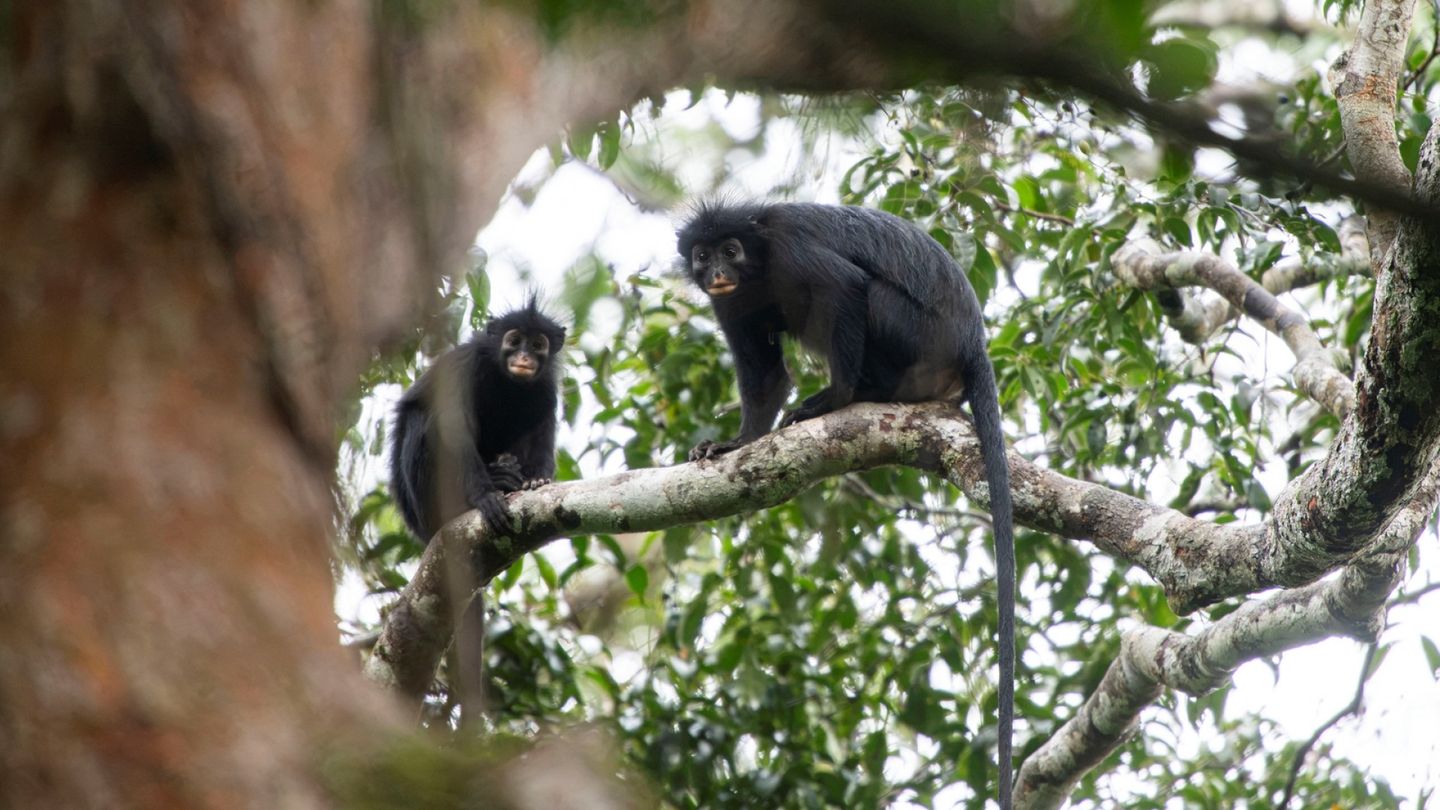
A new monkey species, distinguished by its orange facial fur and a white spot on its back, has been identified in the Democratic Republic of Congo. Dubbed "Likweli" and scientifically named Colobus congoensis, the primate is described as rare, shy, and preferring the high canopy of trees.
The species is also very rare, shy and prefers high up in the treetops. Out of 52 local communities interviewed by the researchers, only 8 recognized ever having seen it.
Local communities reported seeing the monkey infrequently, with only 8 out of 52 interviewed communities recognizing it. This discovery marks the fifth new monkey species found in Africa in the last 75 years. The Likweli differs from other Colobus monkeys in its facial coloration and spiky "hair," and it is also smaller than its relatives. Like other colobuses, it possesses four fingers but lacks thumbs.
The initial sighting of an unidentified monkey occurred in 2008 through a blurry photograph. It took a decade for researchers to begin unraveling the mystery. Upon establishing a new research center in the area in 2018, scientists re-encountered and photographed similar-looking monkeys. Over the subsequent four years, researchers actively searched for the animals within the Lomami National Park, documenting their vocalizations and examining deceased specimens.
Congoensis stands out from other Colobus monkeys especially with its orange face and spiky "hair." They are also smaller than other colobuses.
Scientists have confirmed Likweli as a distinct species and strongly recommend its immediate classification as endangered. Its habitat is confined to approximately 1,700 square kilometers. Despite residing within a national park, researchers caution that hunting and agriculture in the park's border areas could pose future threats to the species' survival.
The species is also recommended to be classified as endangered immediately, as it occurs only in an area of about 1,700 square kilometers.
DistantNews Editorial
Originally published by Helsingin Sanomat in Finnish. Translated, summarized, and contextualized by our editorial team with added local perspective. Read our editorial standards.
More Stories



From Our Blog

What Gets Lost (and Found) When News Is Translated

The Critical Role of Diaspora Media in Global News

What Travellers Should Know About Countries with Restricted Press

A Digital Nomad's Guide to Following Local News

How the Same Story Looks Different in Different Countries
