


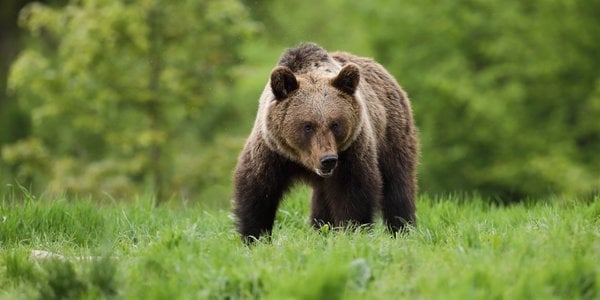
New plan for Poland's Bieszczady: Bears to be collared and monitored
Translated from Polish, summarized and contextualized by DistantNews.
At a glance
News
Named sources
New plan
- Poland is launching a four-year project to protect brown bears by minimizing human-bear conflict in the Podkarpackie and Małopolskie voivodeships.
- The initiative includes establishing a rapid response team, installing secure waste containers, and implementing new regulations for deterring bears.
- Experts estimate 80-110 brown bears in Poland, with conflicts rising due to development, tourism, and improper waste management.
Poland is initiating a comprehensive four-year project aimed at protecting its brown bear population while reducing conflicts with humans in the Podkarpackie and Małopolskie regions. The initiative, spearheaded by the Regional Directorate for Environmental Protection in Rzeszów, seeks to address the growing number of incidents involving bears.
A key component of the project is the formation of a specialized rapid response team. This team will comprise local experts, scientists, and individuals knowledgeable about bear behavior, enabling swift intervention when conflicts arise. Approximately 4 million Polish zloty (PLN) from the project budget will be allocated to communal infrastructure and educational activities. This includes the deployment of specially secured waste containers in affected municipalities to prevent bears from easily accessing food sources.
This will be a special team that will respond, consisting of a local group, but scientists will also be in this team, people who know the behavior of bears, but will also be able to drive up, react.
New regulations, recently signed into law, will empower authorized services and hunters to more effectively deter bears, wolves, and bison outside national park boundaries. Previously, such authority was largely restricted to police, border guards, and the military. The updated legislation allows for the use of non-penetrating ammunition, such as rubber bullets, for scaring away animals when they approach human settlements during the day and lose their natural fear.
Experts estimate Poland's brown bear population to be between 80 and slightly over 100 individuals, a figure significantly lower than previous official estimates. Despite this relatively small population, conflicts are increasing. Dr. Wojciech Śmietana from the Nature and Science Foundation attributes this rise to factors such as increased development, a surge in tourism, and a proliferation of food establishments, particularly post-pandemic. Improper waste management, he noted, effectively creates feeding grounds for bears near residential areas.
This has intensified. And the change in waste management... has resulted in virtually every resident having something like a feeding ground for bears next to their house.
DistantNews Editorial
Originally published by Rzeczpospolita in Polish. Translated, summarized, and contextualized by our editorial team with added local perspective. Read our editorial standards.
More Stories


From Our Blog

What Gets Lost (and Found) When News Is Translated

The Critical Role of Diaspora Media in Global News

What Travellers Should Know About Countries with Restricted Press

A Digital Nomad's Guide to Following Local News

How the Same Story Looks Different in Different Countries
