


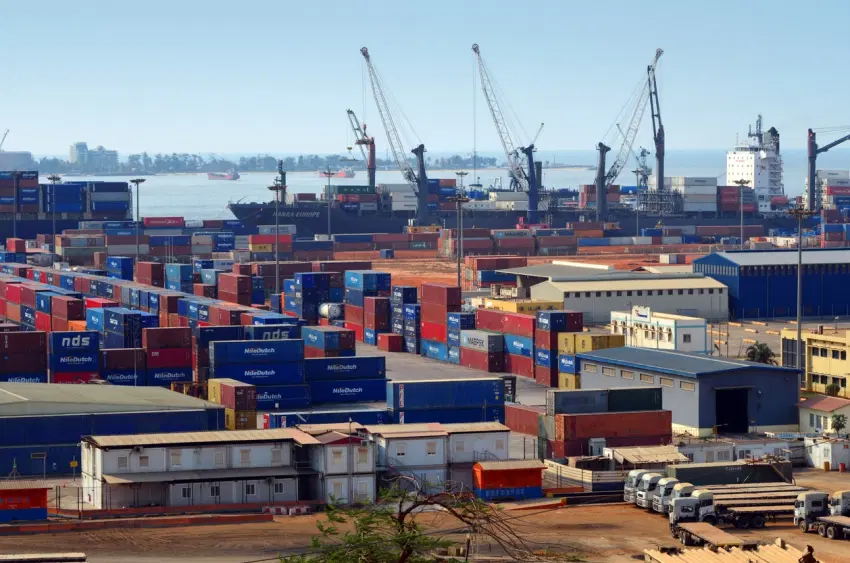
New regulatory environment kicks off at ports
Summarized and contextualized by DistantNews.
At a glance
News
Named sources
New plan
- Nigeria has launched the Nigeria Ports Economic Regulatory Agency (NPERA) to enhance transparency, competitiveness, and efficiency in its ports.
- NPERA's establishment follows President Bola Ahmed Tinubu's assent to the relevant bill, marking a significant reform in port governance after decades of institutional evolution.
- The agency aims to reduce regulatory barriers, promote faster cargo movement, and strengthen Nigeria's position as a trading hub, working alongside the Nigerian Ports Authority (NPA).
Nigeria has officially commenced operations of the Nigeria Ports Economic Regulatory Agency (NPERA), signaling a new era of enhanced transparency, competitiveness, and efficiency at its ports. This launch follows President Bola Ahmed Tinubu's approval of the Nigeria Ports Economic Regulatory Agency Bill, 2026, which formally established NPERA as the statutory body responsible for the economic regulation of the nation's maritime sector.
Dr. Ibrahim Shema, Chairman of the NPERA Governing Board, highlighted the agency's origins, tracing port economic regulation back to the Nigerian Shippers’ Council in 1978 and the subsequent concessioning of port terminals in 2006. The Shippers’ Council had been designated as the interim Port Economic Regulator in 2014, undertaking key functions such as tariff regulation and dispute resolution. Shema described the new legislation as a fundamental reform, representing the culmination of nearly five decades of institutional development in port economic regulation.
NPERA's establishment is designed to complement, not compete with, the Nigerian Ports Authority (NPA), which will continue to manage port infrastructure and landlord functions. "This is not about creating competing authorities. It is about establishing a coherent system in which institutions work together, each within its statutory responsibilities," Shema stated. NPERA will concentrate on minimizing uncertainty and removing unnecessary regulatory hurdles, thereby facilitating quicker cargo movement and bolstering Nigeria's competitiveness as a destination for trade and investment. Transparency, fairness, predictability, efficiency, and accountability are identified as the core principles guiding the agency's operations.
Executive Secretary/CEO of NPERA, Dr. Pius Akutah, expressed confidence that the new framework will significantly clarify the regulatory landscape within one to two years. The agency intends to ensure fair pricing, foster competition, improve trade facilitation, and strengthen government revenue. The NPERA Act grants the agency enhanced powers to manage commercial disputes and protect the interests of port users and stakeholders. For port operators and users, this reform promises greater clarity on tariffs, charges, licensing, service standards, and dispute resolution, contributing to a more predictable business environment.
This is not about creating competing authorities. It is about establishing a coherent system in which institutions work together, each within its statutory responsibilities.
DistantNews Editorial
Originally published by Vanguard. Summarized and contextualized by our editorial team with added local perspective. Read our editorial standards.
More Stories



From Our Blog

How the Same Story Looks Different in Different Countries

What Gets Lost (and Found) When News Is Translated

The Critical Role of Diaspora Media in Global News

What Travellers Should Know About Countries with Restricted Press

A Digital Nomad's Guide to Following Local News
