


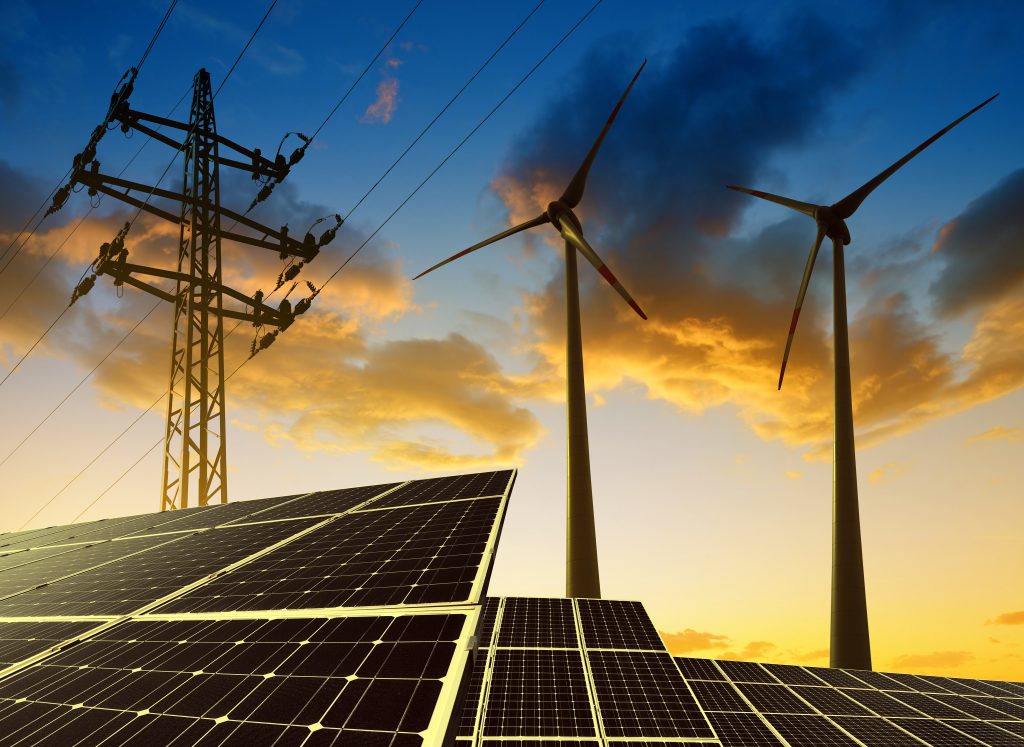
New spatial plan for renewables: Where solar and wind will be limited under new rules
Translated from Greek, summarized and contextualized by DistantNews.
At a glance
News
Official statement
Outcome reported
- Greece aims to boost energy autonomy and lower prices by increasing renewable energy production from solar and wind power.
- A new Special Spatial Framework for Renewable Energy Sources (RES) sets clearer boundaries for installations and environmental protection, replacing a 2008 framework.
- The updated framework restricts solar farms in protected areas, forests, wetlands, and near cultural heritage sites, while also establishing land coverage limits.
Greece is implementing a new Special Spatial Framework for Renewable Energy Sources (RES) to increase its energy autonomy and secure more affordable prices for households and businesses. The framework aims to expand solar and wind power generation while establishing clearer guidelines for installations and environmental protection.
Approved by ministerial decision and published on August 19, 2026, this new framework replaces the one established in 2008 when renewable energy sources played a much smaller role in Greece's energy system. The updated plan addresses the rapid growth of wind and solar power, the central role of energy storage, and the nation's ambitious targets for renewable energy participation in its overall energy consumption.
The National Energy and Climate Plan (NECP) projects that by 2030, RES will account for at least 43% of Greece's gross final energy consumption and 75.7% of its gross final electricity consumption. The new framework seeks to transition RES development from rapid expansion to organized spatial growth.
Our goal is to produce more Greek energy from the sun and wind, strengthening our energy autonomy and ensuring more affordable prices for households and businesses.
Minister of Environment and Energy Stavros Papastavrou emphasized the need for planning, rules, and respect for space and the environment in harnessing solar and wind energy. A key objective is to clearly define areas suitable for RES projects and those requiring protection. Significant changes include a unified set of restrictions for photovoltaic (PV) installations nationwide.
New PV stations will be prohibited in protected Natura 2000 areas, forests, wetlands, national parks, natural monuments, aesthetic forests, areas of special natural beauty, protected cultural heritage sites, and near drinking water sources. Following public consultation, historical sites, ancient monuments, and protected monuments have also been added to this list. For floating PV systems, additional restrictions apply to diving parks, shipwrecks, and anchoring areas.
The framework also introduces a limit on total land coverage, calculating the "carrying capacity" for PV installations at the regional unit level as a percentage of its total area. This aims to control the concentration of installations and reduce pressure on land use.
The utilization of the sun and wind requires a plan, rules, and respect for space and the environment.
DistantNews Editorial
Originally published by Ta Nea in Greek. Translated, summarized, and contextualized by our editorial team with added local perspective. Read our editorial standards.
More Stories


From Our Blog

What Gets Lost (and Found) When News Is Translated

The Critical Role of Diaspora Media in Global News

What Travellers Should Know About Countries with Restricted Press

A Digital Nomad's Guide to Following Local News

How the Same Story Looks Different in Different Countries
