


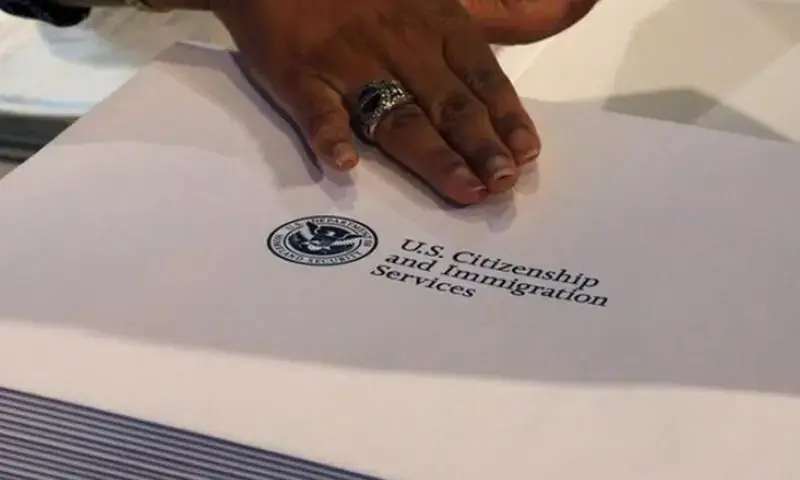
New US policy gives officials more power to reject immigration filings
Summarized and contextualized by DistantNews.
At a glance
News
Official statement
New plan
- A new U.S. Citizenship and Immigration Services (USCIS) policy, effective August 5, grants immigration officials broader discretion to deny incomplete applications.
- Applicants must now prove eligibility and submit all required documents upfront; missing items may lead to immediate denial without prior requests for evidence.
- The policy aims to reduce frivolous filings and improve efficiency, potentially impacting many South Asian immigrants who frequently submit complex applications.
Immigrants seeking work permits, green cards, or changes in their status in the United States now face a heightened risk of application denial under a new policy implemented by U.S. Citizenship and Immigration Services (USCIS) on August 5.
The updated guidance empowers immigration officials with broader discretion to reject applications that are incomplete from the outset. Previously, officials would typically issue a Request for Evidence (RFE) or a Notice of Intent to Deny (NOID), allowing applicants a chance to correct errors or provide missing documentation. Under the new rules, applicants must demonstrate their eligibility and submit all necessary supporting documents at the time of filing. Failure to do so may result in an immediate denial without these prior opportunities for correction.
USCIS stated that this change restores officers' discretion under existing Department of Homeland Security regulations. It reverses a previous Biden-era policy that generally encouraged officers to seek additional evidence before denying incomplete applications. The agency believes the new policy will curb the submission of incomplete or "placeholder" applications, which some used to gain temporary immigration advantages like work authorization while awaiting required evidence. USCIS anticipates this will enhance efficiency and shorten processing times for those who submit complete applications.
This policy shift could have significant practical consequences for many South Asian immigrants, who constitute a large portion of family-sponsored and employment-based immigration applications. These applications often involve extensive documentation, and immigration lawyers note that forgetting a single required document or failing to demonstrate eligibility at the point of filing could now lead to swift rejection. However, the policy does not alter the fundamental eligibility criteria for obtaining a green card, work permit, or citizenship.
DistantNews Editorial
Originally published by Dawn. Summarized and contextualized by our editorial team with added local perspective. Read our editorial standards.
More Stories



From Our Blog

What Gets Lost (and Found) When News Is Translated

The Critical Role of Diaspora Media in Global News

What Travellers Should Know About Countries with Restricted Press

A Digital Nomad's Guide to Following Local News

How the Same Story Looks Different in Different Countries
