


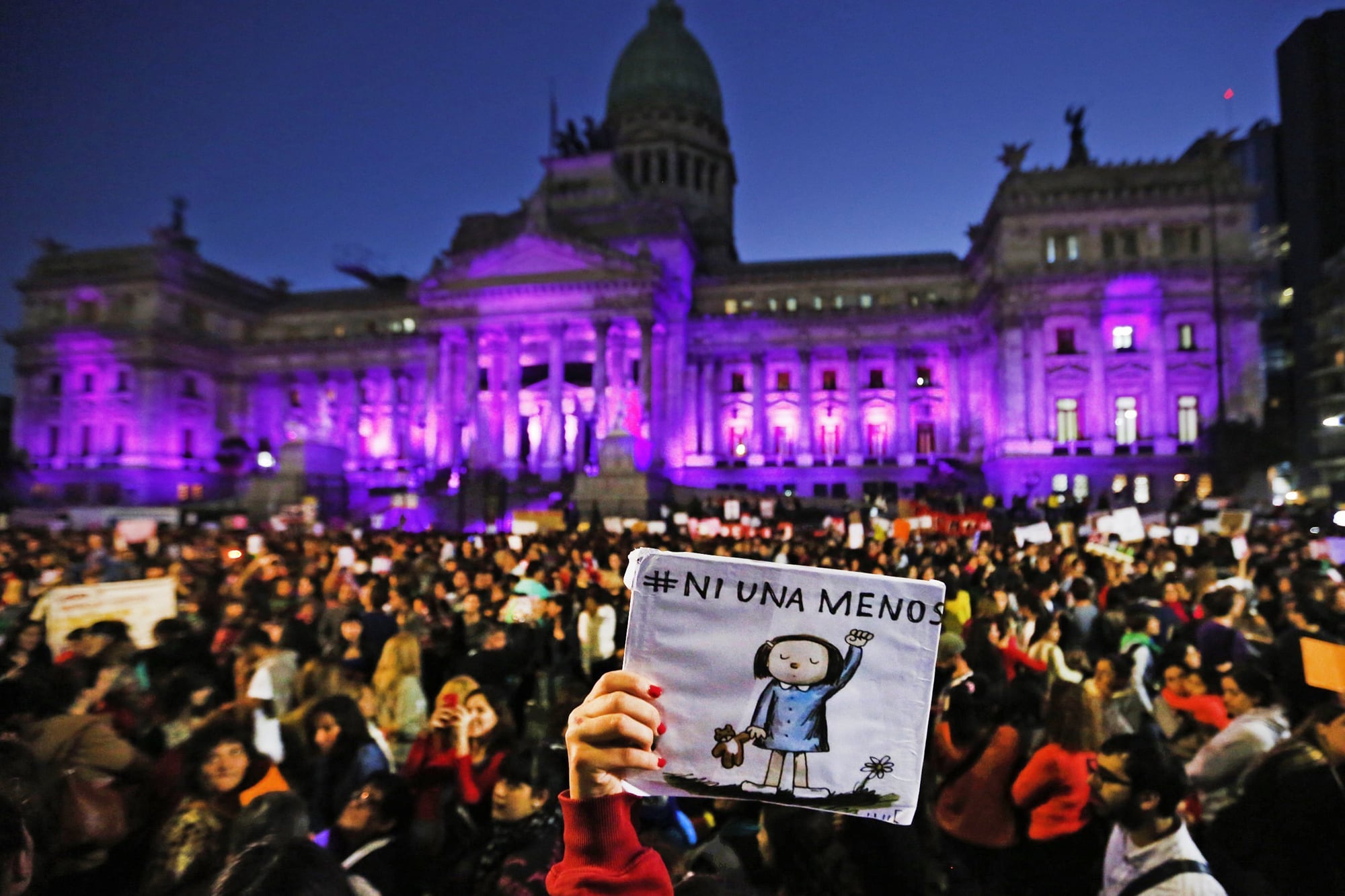
Ni Una Menos marches across Argentina against gender violence amid shock over recent femicides
Translated from Spanish, summarized and contextualized by DistantNews.
At a glance
News
Sources not specified
Context piece
- The Ni Una Menos movement is holding marches across Argentina against gender-based violence.
- The demonstrations occur 11 years after the first march following the femicide of Chiara Páez.
- This year's marches are taking place amidst the shock and grief over the recent crimes against Agostina Vega and Dulce María Beatriz Candia.
The Ni Una Menos movement is organizing marches across Argentina today, protesting against gender-based violence. The demonstrations mark 11 years since the first major mobilization following the femicide of Chiara Páez. The movement's slogan for this year's protests is "Vivas, libres y desendeudadas nos queremos" (We want to live, free, and debt-free).
The timing of these marches is particularly significant, occurring in the wake of recent high-profile crimes against women. The collective is marching amidst the profound shock and grief caused by the murders of Agostina Vega and Dulce María Beatriz Candia, highlighting the ongoing crisis of violence against women in the country.
Ni Una Menos began in 2015 as a response to the alarming rise in femicides in Argentina. It quickly grew into a powerful feminist movement advocating for women's rights, demanding justice, and calling for systemic changes to combat gender-based violence. The movement has been instrumental in raising public awareness and pressuring the government to take action.
Today's marches are a somber reminder of the persistent challenges faced by women in Argentina. The organizers aim to honor the victims, demand accountability for perpetrators, and push for comprehensive policies to prevent femicides and protect women from all forms of violence. The slogan "Vivas, libres y desendeudadas nos queremos" encapsulates the broader feminist agenda, which includes not only safety but also economic independence and freedom from patriarchal structures.
DistantNews Editorial
Originally published by La Nación in Spanish. Translated, summarized, and contextualized by our editorial team with added local perspective. Read our editorial standards.
More Stories


From Our Blog

What Gets Lost (and Found) When News Is Translated

The Critical Role of Diaspora Media in Global News

What Travellers Should Know About Countries with Restricted Press

A Digital Nomad's Guide to Following Local News

How the Same Story Looks Different in Different Countries
