

Nicaragua Tells Guatemala to Respect Its Right to Define Electoral Policies
Translated from Spanish, summarized and contextualized by DistantNews.
At a glance
News
Official statement
Context piece
- Nicaragua has sharply criticized Guatemala's rejection of President Daniel Ortega's stated intention to eliminate democratic alternation in the country's elections.
- Nicaragua invoked the 1987 Esquipulas Accords, emphasizing the principle of respecting others' rights as the foundation of peace.
- Guatemala's Foreign Ministry condemned Ortega's remarks as a violation of international human rights and democratic principles, joining criticism from the UN and other nations.
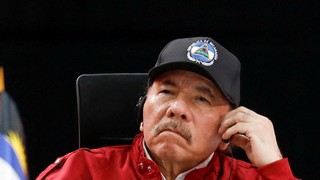
Nicaragua's Foreign Ministry responded forcefully to Guatemala's condemnation of President Daniel Ortega's remarks about eliminating democratic elections. The Nicaraguan ministry invoked the historic 1987 Esquipulas Accords, a peace agreement for Central America, to underscore its stance. It reminded Guatemala that the core message of those accords, and indeed, a fundamental principle for peaceful coexistence, is the respect for the rights of others.
"From before Esquipulas, through Esquipulas, and until today, the message is the same: The respect for the rights of others, is peace," stated Nicaragua's Ministry of Foreign Affairs in an official note. The ministry contrasted current voices that contradict these established values with the bravery shown by Central American leaders during difficult times, who promoted the right to live peacefully and prosper.
Guatemala's Foreign Ministry had previously issued a statement rejecting Ortega's assertion that "elections will not happen again here (in Nicaragua) so that they (the opposition) can try to seize the government, seize power through there." Guatemala declared that Ortega's statement constituted a grave violation of the UN Charter, the Universal Declaration of Human Rights, the Inter-American Democratic Charter, and the International Covenant on Civil and Political Rights, alongside democratic principles and universal suffrage.
Guatemala's rejection aligns with criticism from the UN High Commissioner for Human Rights, Volker Türk, and other countries including the United States, the Dominican Republic, Panama (which recalled its ambassador), and Costa Rica. However, Nicaragua's National Assembly president, Gustavo Porras, later attempted to clarify Ortega's statement. Porras suggested Ortega meant that elections would not be held under the control of "imperialists" seeking to impose their power, implying a need for a new constitutional framework to protect against foreign interference and "traitors to the homeland."
DistantNews Editorial
Originally published by El Deber in Spanish. Translated, summarized, and contextualized by our editorial team with added local perspective. Read our editorial standards.
More Stories


From Our Blog

What Gets Lost (and Found) When News Is Translated

The Critical Role of Diaspora Media in Global News

What Travellers Should Know About Countries with Restricted Press

A Digital Nomad's Guide to Following Local News

How the Same Story Looks Different in Different Countries
