

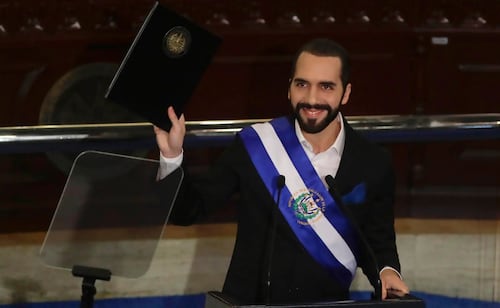

Nicaragua: The dictatorship that survives Trump
Translated from Spanish, summarized and contextualized by DistantNews.
At a glance
Analysis
Sources not specified
Context piece
- Nicaragua is not a priority for the United States under President Donald Trump, unlike Venezuela or Cuba, as it poses no threat to U.S. interests in the region.
- Historical U.S. interventions in Nicaragua, from the 1850s to the 1980s, have often been violent and counterproductive, aimed at protecting U.S. interests or combating Cold War adversaries.
- The article suggests that despite Nicaragua's government becoming a dictatorship since 2007 and flagrantly violating human rights, the U.S. has not intervened, implying that Trump's focus is not on democracy or human rights.
Nicaragua's current government has evolved into a dictatorship since 2007, yet it remains outside the scope of significant U.S. attention, according to an analysis in El Universal. Unlike Venezuela or Cuba, Nicaragua does not represent a threat to American interests in the region. The article posits that this lack of priority stems from Nicaragua's limited natural resources and the absence of any perceived threat to U.S. influence.
Historically, U.S. involvement in Nicaragua has been marked by violence and unintended consequences. Interventions dating back to the 1850s, including the Marine occupation from 1912-1933 to protect the United Fruit Company, and the support for the Somoza dictatorship, illustrate a pattern of U.S. actions serving its own interests. Following the 1979 Sandinista revolution, the U.S. again intervened through proxy groups like the Contras.
The current U.S. administration, under President Trump, appears to have deprioritized Nicaragua. The article argues that Trump's focus is not on promoting democracy or human rights, as evidenced by his approach to Venezuela. This disengagement from Nicaragua is also linked to a broader U.S. shift away from ideological concerns in the post-Cold War era, with a greater emphasis on free trade and economic interests, particularly during the Clinton administration.
DistantNews Editorial
Originally published by El Universal in Spanish. Translated, summarized, and contextualized by our editorial team with added local perspective. Read our editorial standards.
More Stories
María Corina Machado rejects dialogue with Delcy Rodríguez government; demands real progress in Vene…
Without evidence, Javier Milei accuses Brazil and Mexico of funding 'anti-Argentine campaign'; diplo…
Sheinbaum champions AMLO's legacy with universal senior pension; aid is universal, not conditioned
From Our Blog

What Press Freedom Means for the News You Read

What Gets Lost (and Found) When News Is Translated

The Critical Role of Diaspora Media in Global News

What Travellers Should Know About Countries with Restricted Press

A Digital Nomad's Guide to Following Local News
