


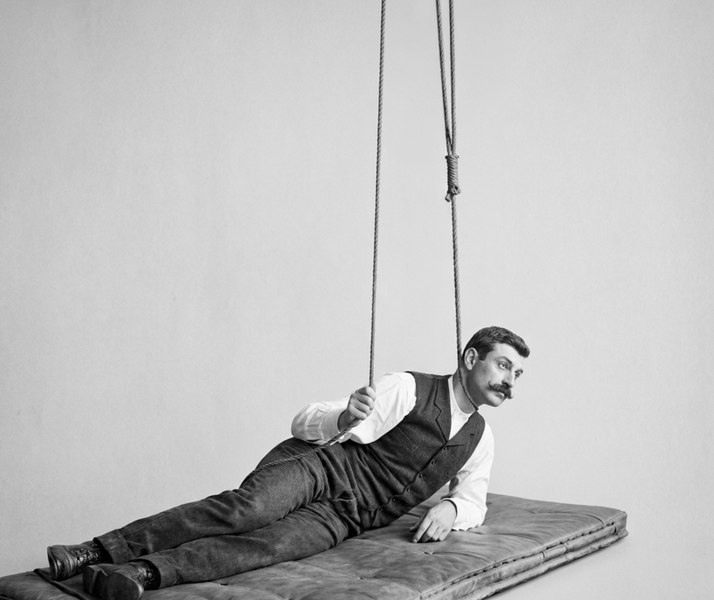
Nicolae Minovici: The doctor who studied death by hanging himself 12 times
Translated from Romanian, summarized and contextualized by DistantNews.
At a glance
In-depth
Sources not specified
Context piece
- Romanian physician Nicolae Minovici conducted dangerous experiments in 1904, including hanging himself 12 times, to study death and life-saving techniques.
- His research revolutionized forensic medicine by demonstrating that death by hanging is often due to interrupted blood flow to the brain, not just asphyxiation.
- Minovici's findings, published in a French Academy treatise, helped identify hidden crimes, such as murders disguised as suicides.
In 1904, Romanian professor Dr. Nicolae Minovici subjected himself to perilous situations to understand the sensations of hanging, a groundbreaking experience that revolutionized forensic medicine worldwide. He later published his findings in "A Study on Hanging."
I observed that cases of hanged individuals whose feet touched the ground were very frequent. Until my experiments, the general belief in forensic medicine was that a hanged person always dies from asphyxiation. The cessation of breathing due to the rope's strangulation caused asphyxia and thus death. However, the question arises: why do hanged individuals whose feet touch the ground also die? Because there are many cases of people hanging from a doorknob or a window handle, with their feet touching the floor. In such cases, with a simple spasm of death, the rope loosens, air enters the throat, and the suicide is saved.
Minovici initiated his research after observing frequent cases of individuals found hanging with their feet touching the ground. The prevailing belief in forensic medicine at the time was that death by hanging always resulted from asphyxiation due to the rope constricting the airway. However, Minovici questioned why people whose feet were still on the ground died. He hypothesized that a simple spasm during death could loosen the rope, allowing air to enter the throat and save the person.
To test his theory, Minovici stated he hung himself 12 times, with an assistant ready to release the rope at the last moment. In one instance, he recounted, a mere second saved him. His assistant, in a panic, jumped to lift him but forgot to release the rope. Minovici, still conscious, used his last strength to slap his assistant, who then dropped the rope, saving him.
To explain this to myself, I hung myself 12 times, of course with someone next to me to release the rope at the last moment. In one of these 12 cases, a single second saved me from death. The helper, seeing me, jumped to lift me up, but in his confusion, forgot to release the rope from his hand. Since I had not completely lost consciousness, I slapped him with my last strength, and he, out of fear, let go of the rope. I was saved!
Through these dangerous experiments, Minovici made a sensational discovery: death by hanging is not always due to asphyxiation. He found that in cases where the feet touch the ground, death occurs from the interruption of blood flow to the brain, leading to loss of consciousness before asphyxiation. This meant that spasms, a loosened rope, or air entering the throat were irrelevant if consciousness was already lost.
the death of the hanged person is not always due to asphyxia or, more precisely, hanged persons whose feet touch the ground do not die from asphyxia, but from the interruption of blood circulation to the brain and thus from loss of consciousness before asphyxia occurs. The spasm of death does not find him conscious, so propping his feet on the ground, loosening the rope, and air entering the throat do him no good.
His research on the mechanics of hanging appeared in a treatise published by the French Academy of Sciences, becoming a study subject in universities globally. Minovici's personal experience also aided in uncovering hidden crimes. He cited the famous case of Gică Mică, who murdered his wife and staged her hanging to look like a suicide. The victim's body was found with her feet on the floor, but Minovici's extensive experience with hanging positions left no doubt that she had been murdered. He noted that assassins attempting to disguise murders as suicides would inevitably make mistakes due to their lack of knowledge about the mechanics of hanging.
A rich experience with the position of hanged individuals left us no doubt that Gică Mică's wife was killed by someone else and then placed with her neck in the rope to confuse the investigations. Assassins who might want to cover up their crimes in the future by arranging the hanging of their victims are warned: they do not know the mechanics of hanging and it is fatal for them to make mistakes that reveal them. Without our extensive experience in this matter.
DistantNews Editorial
Originally published by Adevărul in Romanian. Translated, summarized, and contextualized by our editorial team with added local perspective. Read our editorial standards.
More Stories



From Our Blog

What Gets Lost (and Found) When News Is Translated

The Critical Role of Diaspora Media in Global News

What Travellers Should Know About Countries with Restricted Press

A Digital Nomad's Guide to Following Local News

How the Same Story Looks Different in Different Countries
