


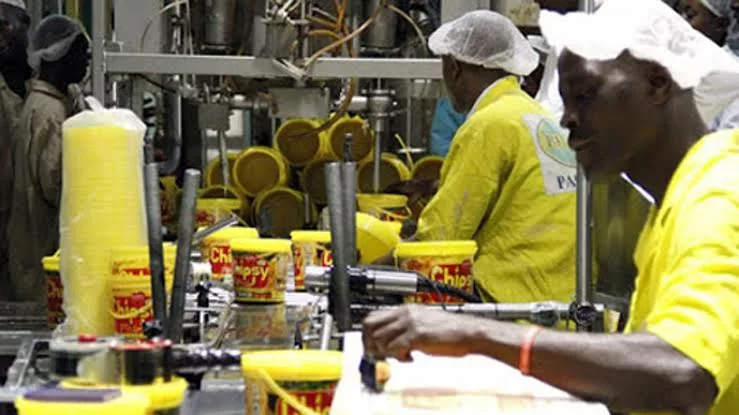
Nigeria manufacturers groan as high credit, production costs threaten recovery
Translated from English and summarized by DistantNews. Read the original for the full story.
At a glance
News
Named sources
Context piece
- Nigerian manufacturers face significant threats to recovery from high credit costs and rising production expenses.
- Limited access to finance, particularly high commercial bank lending rates, is the primary challenge, exacerbated by the Central Bank of Nigeria's monetary policy.
- Despite a slight increase in confidence, manufacturers struggle with inadequate credit flow, rising energy, distribution, and raw material costs, impacting their ability to expand and create jobs.
Nigerian manufacturers are grappling with substantial obstacles to economic recovery, primarily driven by the high cost of credit and escalating production expenses. The Manufacturers Association of Nigeria (MAN) highlighted in its latest report that limited access to finance remains the most critical challenge, with a significant majority of executives pointing to commercial bank lending rates as a major deterrent to productivity.
The report indicates that the volume of credit available to the sector is insufficient. Manufacturers directly link the elevated cost of borrowing to the Central Bank of Nigeria's monetary policy, specifically the Monetary Policy Rate (MPR) of 26.5 percent. This high-interest-rate environment inflates credit and production costs, consequently weakening the sector's capacity for expansion, investment, and job creation.
Despite a modest improvement in manufacturers' confidence, rising energy, distribution, shipping, and raw material costs continue to constrain productivity. While reforms in the foreign exchange market have brought some stability, about half of the surveyed manufacturers report that these improvements have not translated into sufficient foreign exchange access for their operations. This scarcity limits their ability to operate at full capacity and increases the cost of imported inputs and machinery.
Furthermore, only a minority of manufacturing executives find government expenditure on infrastructure encouraging, signaling concerns about the slow impact of public investments on productivity. The persistent challenges of power outages, inadequate foreign exchange, high production costs, raw material shortages, multiple taxation, and insufficient government infrastructure continue to hinder the sector's potential.
Two in every three CEOs cited commercial bank lending rates as a disincentive to manufacturing productivity.
About this summary
Originally published by Vanguard in English. Translated, summarized, and contextualized automatically by DistantNews, with a note on how the source frames the story. Not individually reviewed before publishing. How this works.
More Stories



From Our Blog

How the Same Story Looks Different in Different Countries

What Gets Lost (and Found) When News Is Translated

The Critical Role of Diaspora Media in Global News

What Travellers Should Know About Countries with Restricted Press

A Digital Nomad's Guide to Following Local News
