


Nigeria plans new survey on illicit arms to combat insecurity
Translated from English, summarized and contextualized by DistantNews.
At a glance
News
Named sources
New plan
- The Nigerian government is preparing to conduct a new national survey on illicit small arms and light weapons, a decade after the first in 2016.
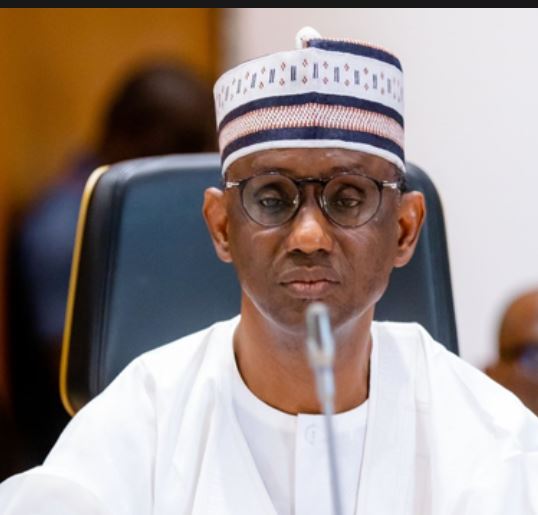
- National Security Adviser Nuhu Ribadu stated that updated data is crucial for evidence-based policymaking to combat insecurity fueled by illegal weapons.
- The survey aims to improve the tracking of weapons flows and target disarmament efforts more effectively, requiring a whole-of-government and society approach.
Nigeria is gearing up for a comprehensive national survey on illicit small arms and light weapons, marking a significant step a decade after the country's first such exercise in 2016. The initiative, disclosed at a workshop in Abuja, underscores the government's commitment to addressing the pervasive insecurity fueled by illegal arms.
Government’s response to this threat cannot be based on guesswork. It must be built on evidence.
National Security Adviser Nuhu Ribadu emphasized the critical need for updated data, stating that policy responses must be evidence-driven rather than based on assumptions. He linked the proliferation of illicit weapons directly to the nation's security challenges, including banditry in the Northwest, farmer-herder conflicts in the North-Central, armed criminal gangs in urban areas, and support for terrorist groups in the Northeast. "Government’s response to this threat cannot be based on guesswork. It must be built on evidence," Ribadu asserted.
First, an accurate and credible baseline is a strategic national security asset. It sharpens the targeting of counter-proliferation and disarmament efforts and strengthens our ability to track the flow of illicit weapons across our borders and within our communities.
The planned survey is seen as a strategic national security asset, designed to sharpen the targeting of counter-proliferation and disarmament efforts. It will strengthen Nigeria's ability to track the flow of illicit weapons across its borders and within communities. Ribadu stressed that this endeavor requires a "whole-of-government and whole-of-society effort," calling for contributions from security agencies, sub-national governments, traditional and religious institutions, civil society organizations, and communities.
Second, this must remain a whole-of-government and whole-of-society effort. Security agencies, sub-national governments, traditional and religious institutions, civil society organisations and communities themselves must all contribute to the process.
Echoing the need for updated information, Adedeji Ebo of the United Nations Office for Disarmament Affairs noted that the 2016 data is insufficient for assessing current security threats. He highlighted that the lack of precise, up-to-date figures hinders the effectiveness of government responses, making it difficult to determine the scale, sources, and movement of illicit weapons. Ebo also advocated for incorporating knowledge from community actors, whose insights are often missed by official data systems.
You cannot conduct a solid national threat analysis in 2026 based solely on data from 2016.
DistantNews Editorial
Originally published by The Punch in English. Translated, summarized, and contextualized by our editorial team with added local perspective. Read our editorial standards.
More Stories


From Our Blog

How the Same Story Looks Different in Different Countries

What Gets Lost (and Found) When News Is Translated

The Critical Role of Diaspora Media in Global News

What Travellers Should Know About Countries with Restricted Press

A Digital Nomad's Guide to Following Local News
