


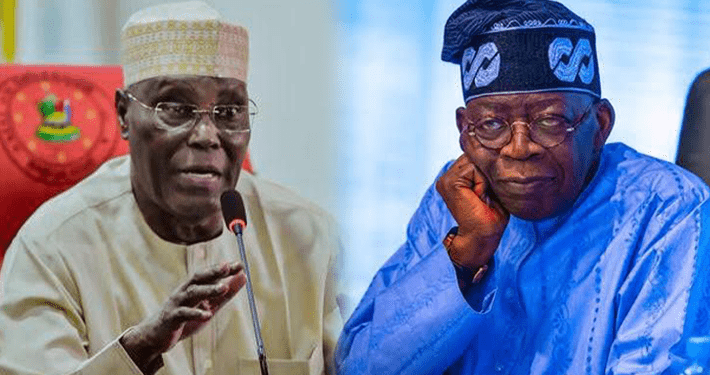
Nigeria's Atiku Abubakar Faults FG's Borrowing Spree Amid Oil Windfall
Translated from English, summarized and contextualized by DistantNews.
At a glance
News
Named sources
Context piece
- Former Nigerian Vice President Atiku Abubakar criticized President Bola Tinubu's administration for aggressive domestic borrowing amid a significant oil revenue windfall.
- Abubakar questioned the necessity of accumulating debt when oil prices have exceeded benchmarks, suggesting a lack of fiscal discipline and transparency.
- He highlighted that the administration has borrowed heavily domestically while millions face hardship, contrasting it with previous administrations' management of excess crude earnings.
Former Nigerian Vice President Atiku Abubakar has strongly criticized the current administration's economic policies, particularly its aggressive domestic borrowing. Abubakar argues that President Bola Tinubu's government is accumulating debt at an alarming rate despite a substantial windfall from high international crude oil prices, estimated at N7.98 trillion.
The exact opposite is the case.
In a statement issued by his Senior Special Assistant on Public Communication, Phrank Shaibu, Abubakar described the economic management as "contradictory, opaque and bereft of fiscal discipline." He pointed out that the federal government has already raised approximately N5 trillion from the domestic bond market in the first half of 2026, nearly 80% of the total borrowed in the same period last year. Abubakar questioned why the government is borrowing so heavily when revenues are robust, asking, "where is the money?"
Abubakar elaborated that the gap between the 2026 budget benchmark for crude oil ($64.84 per barrel) and the prevailing market price (around $92 per barrel for Brent crude between March 1 and July 14) translates to an estimated $42.7 million in additional daily revenue. Over 135 days, this amounts to approximately $5.76 billion, or about N7.98 trillion. He recalled that past administrations had clear mechanisms, like the Sovereign Wealth Fund, for managing excess crude earnings.
First, why is a government enjoying such an extraordinary oil windfall borrowing at almost twice last year’s pace as though the nation were in financial distress? Second, where is the money?
Furthermore, Abubakar lamented the worsening hardship faced by millions of Nigerians, citing UN findings that 80% cannot afford adequate meals. He contrasted this with promises that savings from fuel subsidy removal would be invested in critical sectors like roads, healthcare, and education. Abubakar pledged that an ADC administration under his leadership would ensure transparent accounting of all revenues above the benchmark and deploy excess funds to reduce debt, strengthen fiscal buffers, and invest in development.
Nigerians deserve answers. They deserve accountability. Above all, they deserve a government that manages national wealth in the public interest.
DistantNews Editorial
Originally published by Vanguard in English. Translated, summarized, and contextualized by our editorial team with added local perspective. Read our editorial standards.
More Stories


From Our Blog

How the Same Story Looks Different in Different Countries

What Gets Lost (and Found) When News Is Translated

The Critical Role of Diaspora Media in Global News

What Travellers Should Know About Countries with Restricted Press

A Digital Nomad's Guide to Following Local News
