


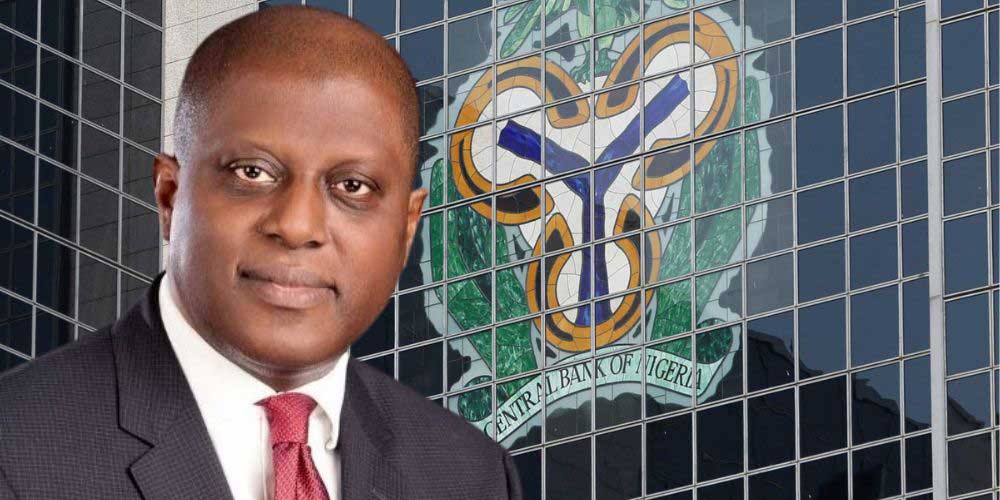
Nigeria’s external reserves hits $52.73b - CBN
Summarized and contextualized by DistantNews.
At a glance
News
Named sources
New plan
- Nigeria's external reserves increased by 7.9% to $52.73 billion as of July 9, 2026, up from $48.88 billion in January.
- The Central Bank of Nigeria attributes this growth to restored confidence in the foreign exchange market and stronger reserve accumulation.
- The CBN also highlighted the successful banking sector recapitalization program, which mobilized N4.65 trillion in fresh capital.
Nigeria's external reserves have seen a significant increase, reaching $52.73 billion as of July 9, 2026. This marks a 7.9% rise from the $48.88 billion recorded in January 2026, according to Central Bank of Nigeria (CBN) Governor Olayemi Cardoso.
Gross external reserves increased by 7.9 percent to $52.73billion as at July 9, 2026, from $48.88billion in January 2026, while net external reserves rose by 900 percent to over $40billion which was $3.99billion in 2023.
Speaking before the Senate Committee on Banking, Insurance and Other Financial Institutions, Cardoso stated that the growth in reserves reflects stronger accumulation and a positive economic outlook. He emphasized that the restoration of confidence in the foreign exchange market has been a key factor driving this increase. Net external reserves also saw a substantial rise, increasing by 900% to over $40 billion from $3.99 billion in 2023.
The programme resulted in the mobilization of N4.65trillion in fresh capital, ranked as one of the most successful banking sector capital-raising exercises in Nigeria’s history.
Cardoso expressed optimism for the latter half of 2026, anticipating a continued moderation in inflation supported by tight monetary policies, improved coordination, exchange rate stability, and easing supply-side pressures. A major achievement highlighted was the N4.65 trillion mobilized through the Banking Sector Recapitalisation Programme in March. This initiative, described as one of Nigeria's most successful banking capital-raising exercises, saw 72.55% of the capital raised from domestic investors and 27.45% from foreign investors, signaling strong confidence in Nigeria's economic prospects.
Notably, 72.55 percent of the capital raised originated from domestic investors, while 27.45 per cent, came from foreign investors, reflecting both strong domestic participation and growing international confidence in Nigeria’s economic prospects.
While inflation briefly fell to 15.06% in February 2026, prompting a reduction in the Monetary Policy Rate, it rose again to 15.93% in May due to external shocks. The Senate Committee, chaired by Senator Adetokunbo Abiru, commended the CBN for maintaining exchange rate stability, enhancing transparency in the forex market, and successfully implementing the recapitalization program. However, Abiru cautioned that stronger banks must increase their support for productive sectors, stating that recapitalization should not be an end in itself.
Recapitalisation should not become an end in itself. Ultimately, the true measure of a stronger banking system lies not merely in larger balance sheets but
DistantNews Editorial
Originally published by Vanguard. Summarized and contextualized by our editorial team with added local perspective. Read our editorial standards.
More Stories



From Our Blog

How the Same Story Looks Different in Different Countries

What Gets Lost (and Found) When News Is Translated

The Critical Role of Diaspora Media in Global News

What Travellers Should Know About Countries with Restricted Press

A Digital Nomad's Guide to Following Local News
