


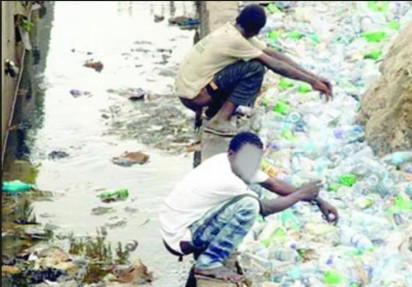
Nigeria's fight against open defecation faces uphill battle
Translated from English, summarized and contextualized by DistantNews.
At a glance
News
Sources not specified
Context piece
- Nigeria's renewed campaign against open defecation faces skepticism due to past unfulfilled promises and a missed 2025 deadline, with the target now pushed to 2030.
- Approximately 46 million Nigerians still practice open defecation due to lack of access to safe toilets, leading to widespread contamination and preventable diseases.
- Experts cite India's successful Swachh Bharat Mission as a model, emphasizing the need for substantial investment, reliable water supply, firm enforcement of sanitation laws, and sustained political commitment in Nigeria.
Nigeria's latest push to eradicate open defecation is met with cautious optimism, tempered by a history of ceremonial exercises and unmet targets. The Federal Ministry of Water Resources and Sanitation has launched a renewed implementation drive under the "Clean Nigeria: Use the Toilet Campaign," but the goalpost has shifted from 2025 to 2030, raising concerns about the effectiveness of current strategies.
This marks a repeat of past efforts. In 2019, the previous administration declared a sanitation crisis emergency, launching similar initiatives with significant fanfare. Despite widespread campaigns and stakeholder engagement, Nigeria has made insufficient progress. Figures remain stark: around 46 million Nigerians lack access to safe toilets, contributing to the contamination of water sources and the spread of diseases like cholera and typhoid. Children are disproportionately affected, suffering from malnutrition and stunted growth.
The persistent practice of open defecation not only poses a public health catastrophe but also damages Nigeria's international image, deters tourism and investment, and incurs substantial economic costs. The country's sanitation crisis is often characterized by grand public spectacles that fail to translate into measurable governance improvements.
In contrast, India's Swachh Bharat (Clean India) Mission offers a potential roadmap. Through massive investment in household toilets, relentless public education, community mobilization, strict monitoring, and sustained political will from the highest levels, India achieved significant progress. Nigeria's path forward requires a similar commitment: substantial funding for sanitation infrastructure, affordable toilet options, reliable water supply, firm enforcement of sanitation laws, and accountability at all government levels, moving beyond tokenism to achieve tangible results.
DistantNews Editorial
Originally published by Vanguard in English. Translated, summarized, and contextualized by our editorial team with added local perspective. Read our editorial standards.
More Stories


From Our Blog

How the Same Story Looks Different in Different Countries

What Gets Lost (and Found) When News Is Translated

The Critical Role of Diaspora Media in Global News

What Travellers Should Know About Countries with Restricted Press

A Digital Nomad's Guide to Following Local News
